Introduction
Choosing between steel vs. aluminum semi-trailers is not just a material decision—it is a strategic choice that affects operating cost, payload efficiency, and long-term profitability.
For fleet owners, the decision directly impacts key factors such as trailer weight, purchase price, fuel consumption, maintenance requirements, and legal payload capacity. While aluminum semi-trailers offer lighter weight and potential fuel savings, they also come with a significantly higher upfront cost. Steel semi-trailers, by contrast, are valued for their strength, durability, and lower initial investment.
This raises a critical question for buyers:
Does the weight saving of aluminum semi-trailers truly justify the higher price tag, or does steel deliver better overall value in real-world operations?
Aluminum vs. Steel Semi-Trailers — Basic Differences at a Glance
At a fundamental level, the difference between aluminum and steel semi-trailers lies in material properties. Steel is heavier and exceptionally strong, making it suitable for heavy-duty and demanding transport environments. Aluminum, by contrast, is significantly lighter and naturally corrosion-resistant, which improves efficiency in weight-restricted and long-haul operations.
The weight difference between these two materials plays a direct role in operating costs. A lighter trailer reduces the total gross vehicle weight, allowing for higher legal payload, improved fuel efficiency, and less strain on the tractor unit. Over time, these factors can translate into lower fuel expenses and higher revenue per trip—provided the trailer regularly operates near legal weight limits.
However, weight is only one part of the equation. Cost, durability, maintenance, and operating environment all influence which material delivers better long-term value.
Aluminum vs. Steel Semi-Trailer Comparison
| Factor | Steel Semi-Trailer | Aluminum Semi-Trailer |
|---|---|---|
| Trailer Weight | Heavier | 20–30% lighter |
| Initial Cost | Lower | Higher |
| Durability | Extremely strong, impact-resistant | Strong but softer than steel |
| Corrosion Resistance | Requires coating and maintenance | Naturally corrosion-resistant |
| Maintenance Needs | Moderate to high | Generally lower |
| Payload Potential | Limited by higher tare weight | Higher legal payload |
This overview highlights why the steel vs. aluminum decision should be based on operational conditions and total cost of ownership, not weight alone.
What Is an Aluminum Semi-Trailer?
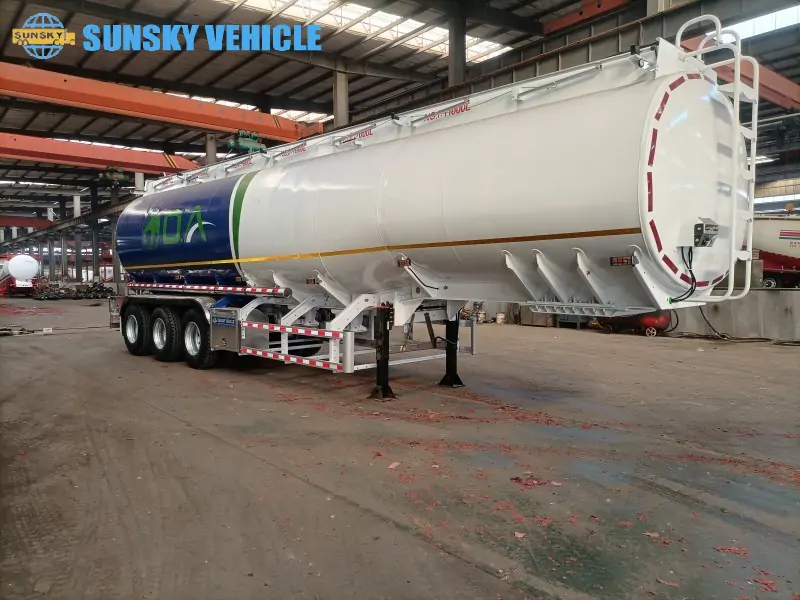
An aluminum semi-trailer is built primarily with aluminum alloy for the main structure, crossmembers, and body components. Compared with steel, aluminum offers a much higher strength-to-weight ratio, which allows manufacturers to reduce overall trailer weight without sacrificing structural integrity for standard freight applications.
Because of these characteristics, aluminum semi-trailers are commonly used in long-haul, weight-sensitive, and fuel-efficiency–focused operations.
Key Advantages of Aluminum Semi-Trailers
Lighter Weight = Higher Payload & Lower Fuel Consumption
Aluminum semi-trailers are typically 20–30% lighter than comparable steel models. The reduced tare weight allows operators to carry more cargo within legal weight limits and improves fuel efficiency over long distances. For fleets operating near maximum GVW, this weight saving can directly increase revenue per trip.
Natural Corrosion Resistance & Lower Maintenance
Unlike steel, aluminum does not rust. Its natural corrosion resistance significantly reduces the need for anti-rust coatings, repainting, and structural corrosion repairs. This makes aluminum trailers particularly attractive in coastal, humid, or winter road-salt environments.
Higher Resale Value & Long-Term Cost Benefits
Thanks to corrosion resistance and slower structural degradation, aluminum semi-trailers often maintain a higher resale value than steel trailers. Over a long service life, this can help offset the higher initial purchase price and improve total cost of ownership.
Easier Handling & Reduced Stress on the Tractor Unit
The lighter structure places less strain on the tractor, suspension, and braking system. This improves handling stability and can reduce wear on the towing vehicle—an important advantage for high-mileage, long-haul fleets.
Potential Drawbacks of Aluminum Semi-Trailers
Despite their efficiency advantages, aluminum semi-trailers are not without trade-offs, especially when evaluated from a cost and durability perspective.
Higher Initial Purchase Cost
One of the most significant barriers is price. Aluminum semi-trailers typically cost 20–40% more than comparable steel models. For fleets with tight budgets or large-scale procurement plans, this higher upfront investment can significantly extend the payback period.
Lower Impact Resistance Compared to Steel
While aluminum offers an excellent strength-to-weight ratio, it is softer than steel and more prone to dents or deformation when subjected to heavy point loads, impacts, or rough handling. In operations involving uneven cargo, construction equipment, or poor road conditions, this can affect long-term structural integrity.
Higher Repair Complexity and Cost
Repairing aluminum structures often requires specialized welding skills and equipment, which are not always readily available. Labor costs are typically higher, and repairs may take longer compared to steel trailers, especially in remote regions or developing markets.
These limitations explain why aluminum semi-trailers, despite their efficiency benefits, are not universally suitable for every operating environment.
What Is a Steel Semi-Trailer?
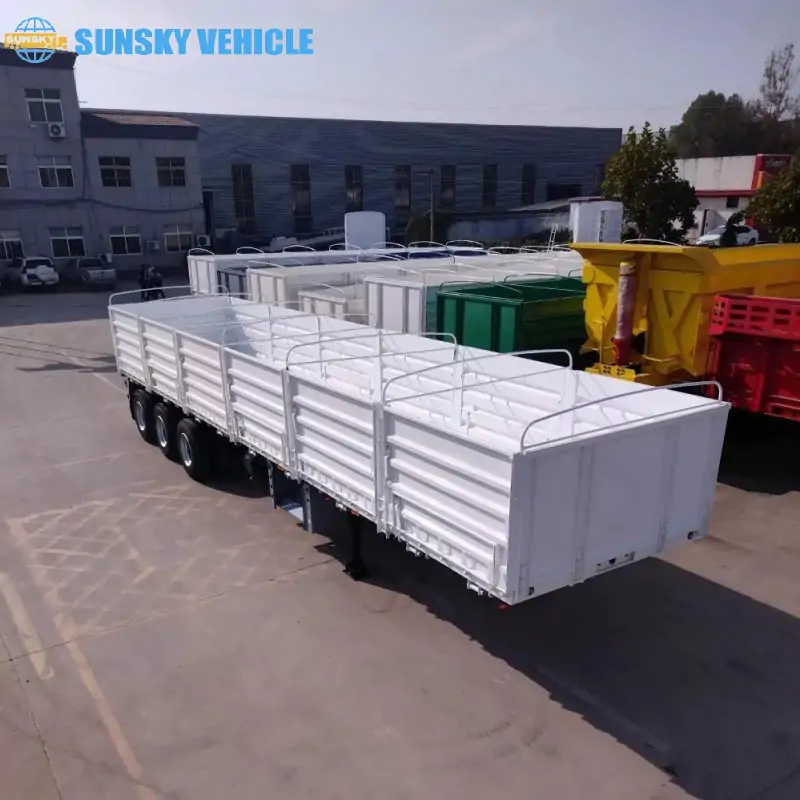
A steel semi-trailer is constructed primarily from high-strength structural steel and remains the most widely used trailer type worldwide. Steel has long been favored for its durability, load-bearing capacity, and ability to withstand harsh operating conditions, making it a standard choice in heavy-duty transport sectors.
Steel semi-trailers are especially common in construction, mining, infrastructure, and developing markets, where road conditions are unpredictable and operational reliability is critical.
Key Advantages of Steel Semi-Trailers
Exceptional Strength and Impact Resistance
Steel offers superior resistance to impact, torsion, and concentrated loads. This makes steel semi-trailers highly suitable for heavy machinery, uneven cargo, and rough or off-road conditions, where structural toughness is more important than weight savings.
Lower Purchase Cost and Easier Budget Planning
Compared to aluminum models, steel semi-trailers come with a significantly lower upfront price, making them attractive to cost-sensitive buyers and fleets expanding at scale. For many operators, the lower entry cost delivers a faster and more predictable return on investment.
Easier and More Accessible Repairs
Steel structures are easier to weld and repair, even in the field. Welding equipment and skilled labor are widely available, which reduces downtime and repair costs—an important advantage in remote regions or markets with limited service infrastructure.
Potential Drawbacks of Steel Semi-Trailers
Corrosion Risk and Higher Maintenance Requirements
Steel is prone to rust if not properly protected. To maintain structural integrity, steel semi-trailers require regular painting, coating, and anti-corrosion maintenance, which adds to long-term operating costs, especially in humid or coastal environments.
Heavier Weight Limits Payload and Fuel Efficiency
The higher tare weight of steel trailers reduces available legal payload and increases fuel consumption. Over long distances, this extra weight can limit revenue potential per trip and raise operating expenses compared to lighter aluminum alternatives.
Operating Cost Comparison: From Purchase to Lifecycle
When comparing steel vs. aluminum semi-trailers, focusing only on the purchase price can be misleading. The more meaningful comparison looks at lifecycle cost, including maintenance, fuel consumption, resale value, and service life.
Initial Purchase vs. Lifecycle Cost
Aluminum Semi-Trailers
Aluminum trailers require a higher upfront investment, often 20–40% more than steel. However, this higher purchase price is partially offset over time by lower maintenance requirements, reduced corrosion-related repairs, and stronger resale value at the end of the trailer’s service life. For fleets with long replacement cycles, these factors can significantly improve total cost of ownership.
Steel Semi-Trailers
Steel trailers offer a much lower entry cost, making them easier to justify from a short-term budget perspective. However, over time, rust prevention, repainting, and structural corrosion repairs can increase maintenance expenses. In aggressive environments, corrosion-related degradation may also reduce residual value.
In short, steel favors lower short-term cost, while aluminum targets long-term cost optimization—assuming the trailer is used long enough to realize those benefits.
Fuel Efficiency and Operational Savings
Trailer weight has a direct impact on fuel consumption. Because aluminum semi-trailers are significantly lighter, they can deliver fuel savings of approximately 10–15% in long-haul operations, depending on route profile, load consistency, and driving conditions.
These fuel savings accumulate gradually. Over thousands of kilometers per year, reduced fuel consumption can begin to offset the initial price difference, particularly for fleets operating high annual mileage and consistently running near legal weight limits.
However, for short-haul routes or operations where trailers rarely reach maximum payload, fuel savings alone may not be sufficient to justify the higher aluminum purchase price. This is why usage pattern and mileage play a decisive role in determining which material delivers better value.
Scenario-Driven Selection Guide
Choosing between aluminum and steel is not about finding the “best” material, but about finding the right fit for your specific operational needs.
When Should You Choose Aluminum?
-
Long-Haul & High-Cost Environments: Ideal for long-distance transportation and regions with high fuel costs. The lightweight nature of aluminum significantly reduces fuel consumption and operational overhead.
-
Corrosive or Coastal Climates: Best for operations with high anti-corrosion requirements or those frequently exposed to humid and seaside environments. Aluminum’s natural oxide layer prevents rust and structural degradation.
-
Efficiency & Asset Value: Choose aluminum if you prioritize higher payload efficiency, fuel economy, and high resale value. While the initial investment is higher, the ROI is realized through increased capacity and premium scrap value.
When Should You Choose Steel?
-
Budget-Conscious & High-Impact Work: A practical choice when budgets are limited and the equipment needs to be highly impact-resistant. Steel handles the “rough and tumble” of construction and mining sites better than aluminum.
-
Heavy Duty & Structural Loading: Essential for trailers that frequently carry extremely heavy or concentrated structural loads. Steel offers superior fatigue strength under intense mechanical stress.
-
Remote or Developing Areas: If your fleet operates in remote areas where maintenance networks are incomplete, steel is the safer bet. It can be easily welded and repaired by almost any local workshop without specialized equipment.
💡 Quick Comparison Reference
| Feature | Aluminum | Steel |
| Best For | Fleet Efficiency & Long-Haul | Heavy Industry & Harsh Sites |
| Durability | Corrosion Resistant | Impact Resistant |
| Value | Higher ROI & Resale | Lower Upfront Cost |
Data Comparison & Decision Tools
Choosing between aluminum and steel isn’t just a preference—it’s a financial calculation. Use the table below to compare how each material impacts your bottom line over the long term.
Side-by-Side Performance Matrix
| Feature | Aluminum Trailer | Steel Trailer | Key Advantage |
| Tare Weight | ~30% – 45% Lighter | Heavy / Standard | Aluminum: Increases legal payload capacity. |
| Initial Cost | Premium (High) | Budget-Friendly (Low) | Steel: Lower barrier to entry for new fleets. |
| Maintenance | Minimal (Rust-proof) | High (Requires paint/coating) | Aluminum: Lower long-term labor costs. |
| Service Life | 15 – 20+ Years | 10 – 12 Years | Aluminum: Exceptional longevity. |
| Fuel Efficiency | Superior (Lower rolling resistance) | Standard | Aluminum: Significant savings on empty returns. |
| Payload Efficiency | Maximum (More revenue/trip) | Standard | Aluminum: Ideal for weight-sensitive cargo. |
| Resale Value | High (Stable scrap value) | Low (Subject to corrosion) | Aluminum: Recovers more capital at end-of-life. |
Interactive Decision Logic: Which is Your Priority?
To help you decide, identify which of the following “Operational Profiles” matches your business model:
1. The “Efficiency Seeker” (Aluminum is your winner)
-
Cargo: Heavy bulk liquids, grain, or high-density freight.
-
Routes: Long-haul, interstate highways.
-
Goal: Maximizing every pound of legal payload and minimizing fuel burn.
-
ROI Vision: Willing to pay more upfront to save $5,000+ annually in fuel and maintenance.
2. The “Rugged Operator” (Steel is your winner)
-
Cargo: Construction debris, scrap metal, or heavy machinery.
-
Routes: Off-road, mining sites, or gravel pits.
-
Goal: Extreme durability and resistance to structural impact.
-
ROI Vision: Immediate cash flow management with lower upfront financing.
FAQ
Before signing the contract, most fleet owners grapple with the same few questions. Here is the industry breakdown of what you need to know.
Which is more durable, aluminum or steel?
It depends on how you define “durable.”
-
Aluminum is more durable against environmental wear (rust and corrosion). It won’t break down in salty or humid air.
-
Steel is more durable against mechanical wear (impact and stress). It is less likely to crack under the extreme twisting forces of off-road terrain or heavy drops.
Is the high initial cost of aluminum actually worth it?
Yes, but only if you have the mileage. If your trailers sit idle or haul light, “empty” loads (like pillows or foam), the fuel savings won’t justify the $10,000+ premium. However, for carriers running 100,000+ miles per year at max weight, the payload increase and fuel savings typically pay for the price gap in less than two years.
Depreciation & Resale Value: What’s the difference?
-
Aluminum: Holds its value remarkably well. Even a 20-year-old aluminum trailer has high “scrap value” because aluminum is infinitely recyclable and doesn’t rust away.
-
Steel: Depreciates faster. Secondary buyers are often wary of hidden rust in the frame, which can lead to structural failure, significantly lowering the resale price.
Regional Selection: Desert vs. Coastal vs. Mountain
-
Coastal/Humid Areas: Aluminum is mandatory to avoid “rust-out” within a few years.
-
Desert/Arid Areas: Steel performs well here as the lack of moisture slows down oxidation, allowing you to save on the initial purchase without high corrosion risk.
-
Mountainous Regions: Aluminum is preferred. The weight savings make a massive difference in engine strain and brake wear during long uphill climbs and steep descents.
Conclusion — Is the Weight Saving Worth the Price Gap?
The short answer is: Weight saving is not a standalone factor. While shedding 2,000 lbs (approx. 900 kg) of tare weight is impressive, its true value is dictated by the intersection of your Operational Scenario + Maintenance Capabilities + Lifecycle Costs.
-
Choose Aluminum if you view your fleet as a long-term efficiency engine where every pound saved is a pound of extra profit.
-
Choose Steel if you view your equipment as rugged tools for high-impact environments where physical toughness and low entry cost are your primary drivers.
Ultimately, the “cheapest” trailer is not the one with the lowest price tag—it’s the one that costs the least per mile over its entire life on the road.