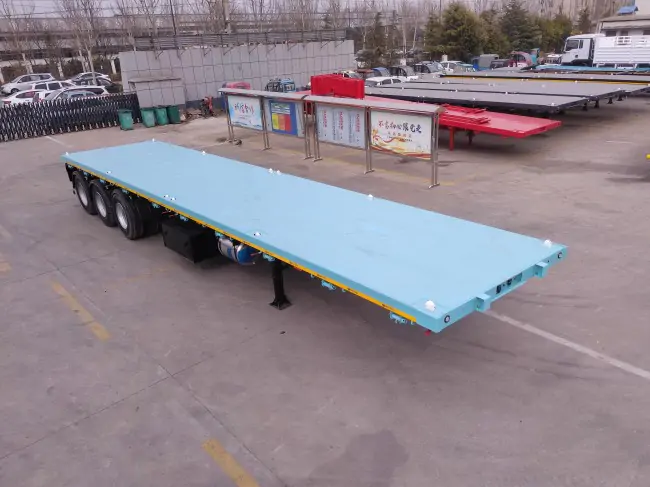
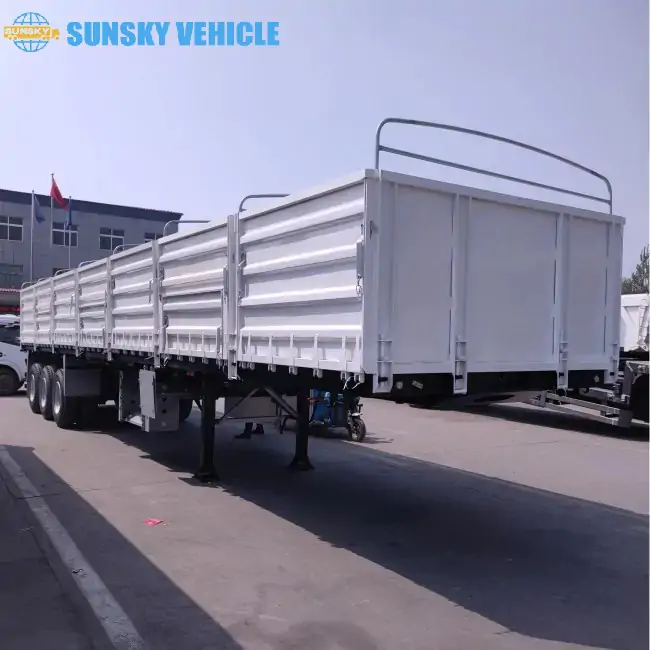
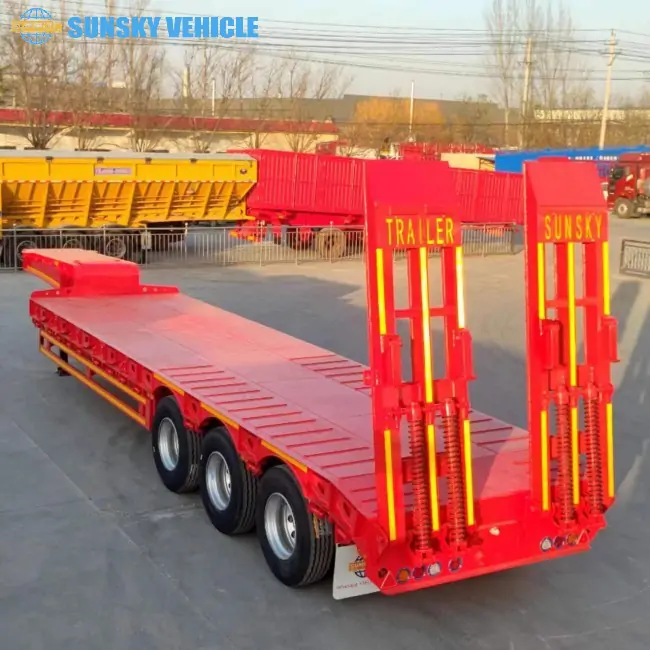
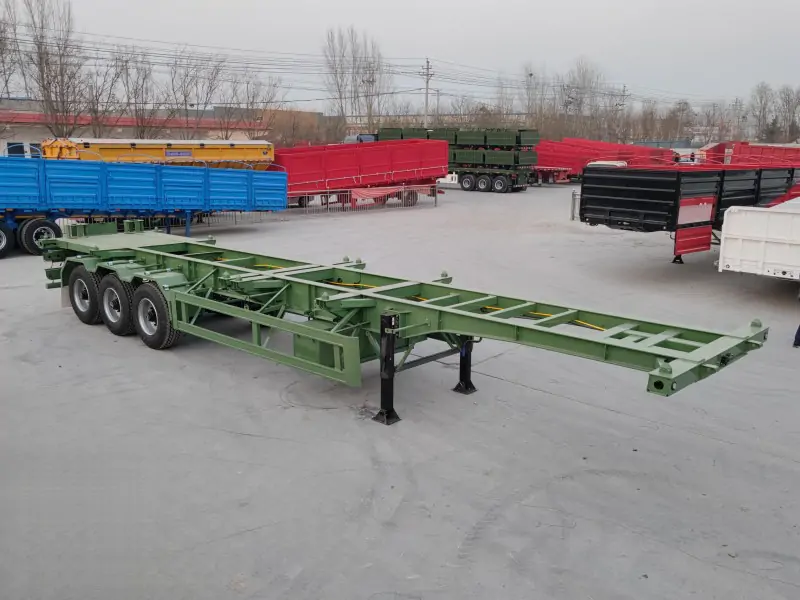
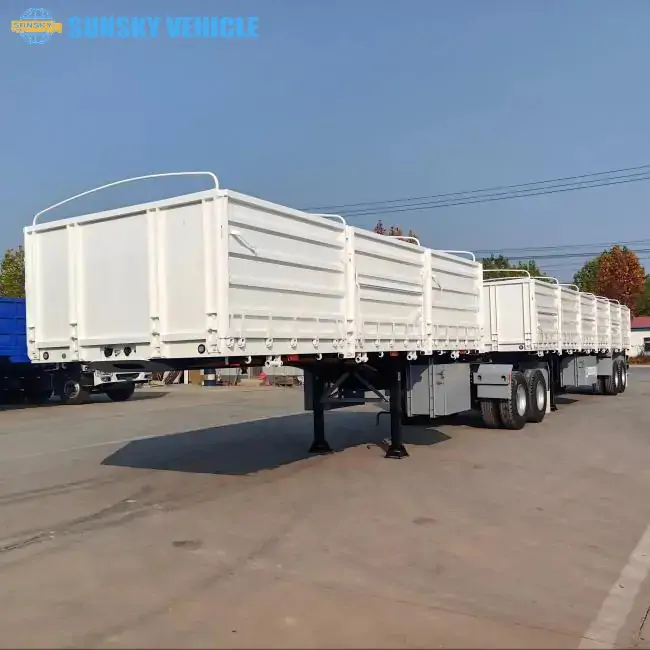
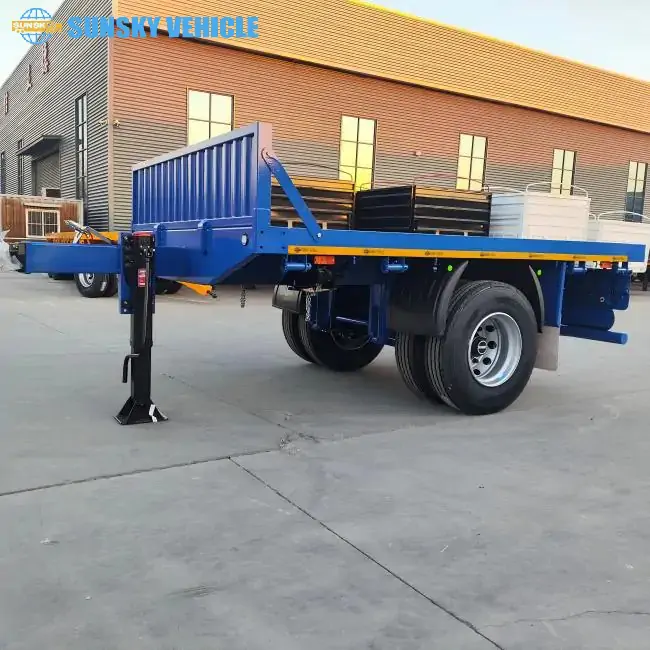
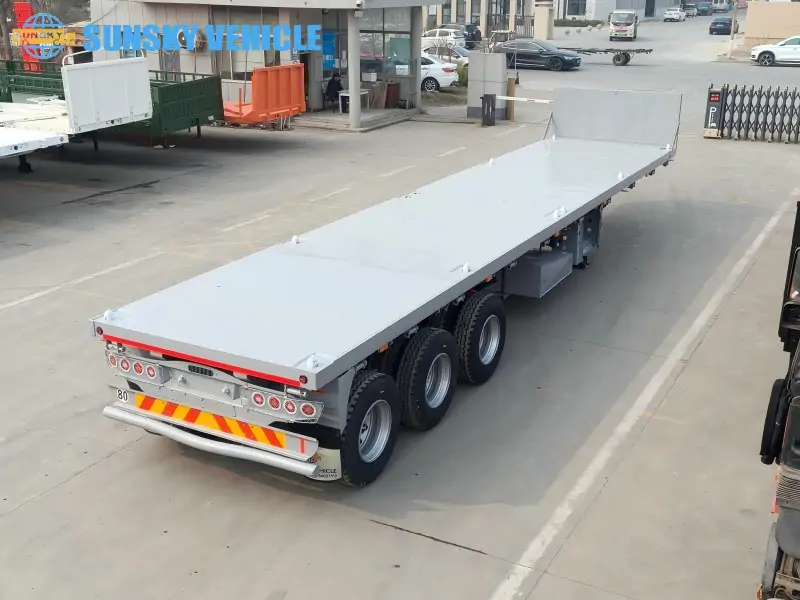
Unleash your hauling power with our robust flatbed trailers. Engineered from premium, high-tensile steel, they provide the open platform and strength needed for any challenging load.
Flatbed trailers offer flexible hauling solutions across a wide range
of industries, from container transportation and bulk cargo to
demanding construction projects.
Container Transportation
Suitable for container haulage when equipped with appropriate
container locks, flatbed trailers connect ports, rail terminals,
and road networks for efficient intermodal transportation.
Bulk & Palletized Cargo
Transport palletized bricks, bagged cement, and other packaged
materials. With specialized bunks and proper load securement,
flatbed trailers can also carry cargo such as logs.
Construction Materials
Deliver steel beams, precast concrete slabs, lumber, scaffolding,
rebar, and pipes directly to job sites. The open deck provides
convenient access for loading and unloading.
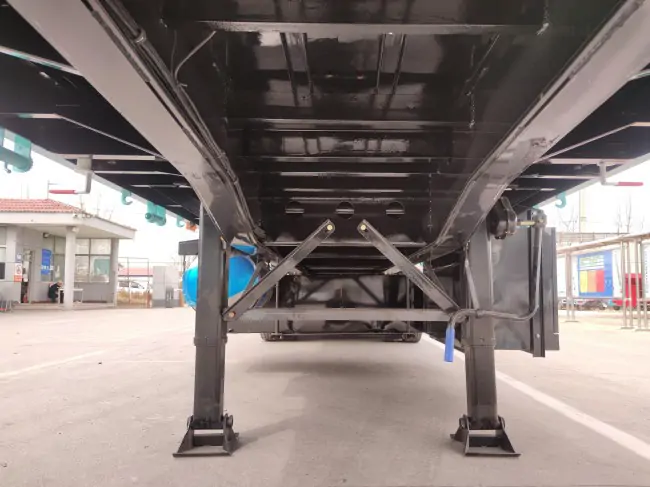
The core of a flatbed trailer’s durability lies in its robust
main beams, typically manufactured from high-tensile steel.
Engineered to withstand heavy loads and torsional forces,
they provide structural integrity and stability during transport.
Loading Platform
Durable Decking Materials
The flat platform is commonly constructed from aluminum,
selected for its corrosion resistance, or steel for demanding
applications. Its sturdy, non-slip surface supports efficient
loading and unloading of diverse and heavy cargo.
Rear Lighting
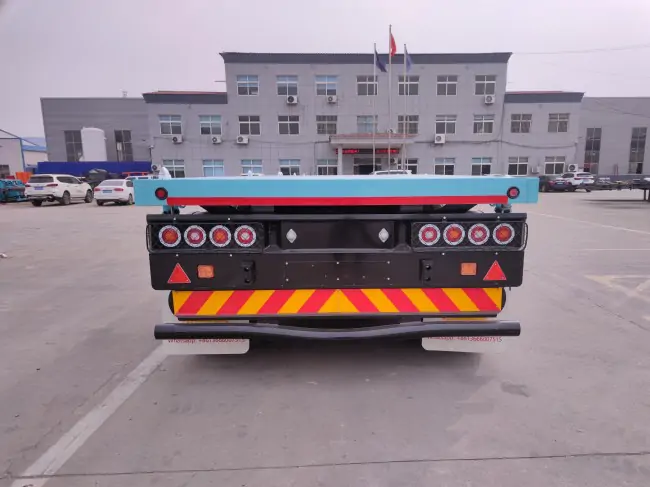
Protected Rear Light Assembly
The rear light assembly features a protective surround
designed to help shield the lights from foreign objects
and minor impacts.
Running Gear
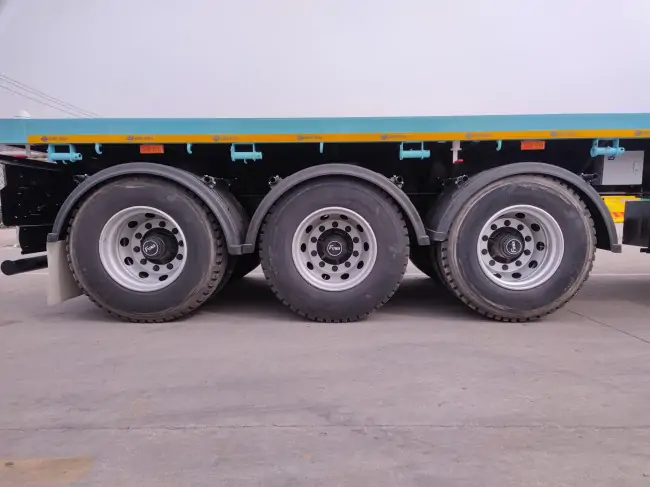
Axle & Suspension Systems
Multiple axles and a robust air or spring suspension system
help distribute the load evenly and reduce road shock to
the cargo. The configuration also supports stable handling
and compliance with applicable axle weight regulations.
Video of semi flatbed trailer
Flatbed Trailer with Henred-type axles and suspension
3-axle flatbed Trailer with Piles
40FT flatbed Container Trailer
flatbed traiiler with dangler trailer
Recommended Products
You May Also Be Interested In
Explore more semi-trailer solutions from Sunsky Vehicle.
Tell us your container size, payload and transport requirements.
Our trailer specialists will recommend the right skeleton trailer
configuration for your business.
20ft / 40ft / 45ft Container OptionsCustom Trailer ConfigurationsFactory Direct Support
Flatbed Trailers
📌 GUIDE
Flatbed trailers are versatile semi-trailers designed for transporting
containers, steel products, construction materials, machinery, and
other cargo that benefits from an open loading platform. This guide
covers flatbed trailer types, deck sizes, key components, applications,
and selection factors to help you choose a suitable trailer for your
transport operation.
What Is a Flatbed Trailer?
A flatbed trailer is a semi-trailer with a flat, open deck and no fixed
roof or enclosed side walls. Its open structure allows cargo to be
loaded from the sides, rear, or above using forklifts and cranes.
This makes it suitable for long, bulky, and irregularly shaped loads
that may be difficult to handle inside an enclosed trailer.
Flatbed trailers carry a wide range of goods, including steel sections,
timber, palletized materials, and equipment. Models fitted with
suitable container twist locks can also transport compatible shipping
containers.
Main Flatbed Trailer Types
Standard Flatbed Trailers
A fixed, open deck provides a practical platform for general freight,
construction materials, and industrial cargo. The appropriate deck
length and axle configuration depend on the load and operating route.
Container-Ready Flatbed Trailers
These trailers combine a full loading deck with container twist locks.
They can carry compatible containers or suitable general cargo,
offering flexibility for operators handling different freight types.
Extendable Flatbed Trailers
An extendable deck accommodates long cargo such as steel structures,
pipes, and prefabricated components. Extension length, load support,
and route restrictions must be checked for each transport task.
Flatbed Trailers with Removable Sideboards
Removable sideboards provide additional containment for suitable
packaged or loose items while retaining access to the loading deck.
Cargo still requires appropriate restraint for road transport.
Deck Sizes and Load Capacity
Flatbed trailers are available in different deck lengths and axle
layouts. Common configurations include nominal 20 ft, 40 ft, and
45 ft platforms, although availability and dimensions vary by model
and market.
Configuration
Typical Use
What to Confirm
20 ft Flatbed
Shorter loads and compatible 20 ft containers
Usable deck area, lock positions, and load distribution
40 ft Flatbed
General freight and compatible container transport
Container layout, deck rating, and axle loads
45 ft Flatbed
Cargo requiring a longer loading platform
Overall dimensions and local route restrictions
Extendable Flatbed
Long materials and structural components
Rated capacity at the required extension length
Payload cannot be determined from deck length alone. Confirm the
trailer’s rated capacity, tare weight, axle and tire ratings, cargo
distribution, and applicable road limits before selecting a model.
Core Components and Structure
Main Beams and Crossmembers:
Form the load-bearing frame and support the deck under the intended
loading conditions.
Decking:
Provides the cargo loading surface. Material and thickness should
match the cargo, handling equipment, and operating environment.
Axles and Suspension:
Support the trailer and help distribute loads. Their configuration
affects ride behavior, maintenance, and permitted axle weights.
Kingpin and Landing Gear:
Connect the trailer to a compatible tractor and support the
uncoupled trailer under specified operating conditions.
Braking and Lighting Systems:
Must suit the tractor connection and the requirements of the
destination market.
Cargo Securing Equipment:
Lashing points, stake pockets, and optional container twist locks
provide attachment or locking positions for compatible loads.
Flatbed Trailer Applications
Container Transportation
With correctly positioned and rated twist locks, a suitable flatbed
trailer can carry compatible shipping containers between ports,
warehouses, and inland logistics terminals.
Construction Materials
Open-deck access makes flatbed trailers useful for transporting steel
beams, rebar, pipes, timber, scaffolding, and precast components to
construction sites.
Palletized and Packaged Cargo
Flatbed trailers can carry bagged cement, palletized bricks, and
other packaged products. Weather-sensitive goods may require
suitable covers and protection.
Machinery and Industrial Equipment
Suitable machinery and equipment can be loaded by crane or other
approved handling methods, provided their weight, dimensions, and
point loads are within the trailer’s ratings.
Key Factors When Choosing a Flatbed Trailer
Cargo Dimensions and Weight:
Identify the largest and heaviest loads, including concentrated
loads and any permitted overhang.
Deck Length and Loading Method:
Match the usable deck area to the cargo and confirm access for
forklifts, cranes, or other handling equipment.
Axle Configuration and Road Conditions:
Consider load distribution, route conditions, maneuvering space,
and local axle weight limits.
Tractor Compatibility:
Check fifth-wheel height, kingpin specification, clearance,
and brake and electrical connections.
Load Securement:
Specify suitable lashing points and container locks for the
intended cargo and restraint method.
Maintenance and Parts:
Review component availability, service access, and expected
operating costs.
Choosing Your Sunsky Flatbed Trailer
Start with your actual transport requirements. Share the cargo type,
maximum load weight, preferred deck length, destination country,
road conditions, and tractor specifications with Sunsky to discuss
a suitable flatbed trailer configuration.
Before placing an order, confirm the final specification, including
deck dimensions, rated capacity, axle and suspension configuration,
container lock positions, braking system, and cargo securing points.
Looking for a flatbed trailer for your operation?
Contact Sunsky with your cargo details and transport requirements
to discuss available configurations and request a quotation.
FAQ
What types of cargo are flatbed trailers best suited for transporting?
Flatbed trailers are ideally suited for transporting cargo that is bulky, oversized, unusually shaped, or requires loading from the top or sides. This includes a wide range of materials such as construction equipment (excavators, forklifts), large machinery parts, building materials (steel beams, lumber, pipes), industrial components, pre-fabricated structures, and securely bundled bulk items. Their open design offers unmatched flexibility for loading and unloading.
How is cargo safely secured on a flatbed semi-trailer to prevent shifting?
Cargo is safely secured on a flatbed semi-trailer using various methods to prevent shifting, sliding, or tipping during transit. This primarily involves robust tie-down equipment such as heavy-duty straps, chains, binders, and dunnage (wood blocks or bracing). Loads must be properly distributed and balanced on the deck. Strategic use of rub rails, stake pockets, and D-rings provides anchor points, ensuring all cargo is tightly secured according to DOT regulations and industry best practices.
What are the advantages of using a flat deck trailer compared to an enclosed van trailer?
The primary advantages of using a flatbed trailer over an enclosed van trailer are unparalleled versatility and accessibility for large or irregular cargo. Flatbeds allow for loading and unloading from any angle (top, side, or rear) using cranes, forklifts, or other equipment, which is impossible with a van. This makes them ideal for oversized machinery, construction materials, and any freight that doesn’t require protection from weather or security against theft that a closed box provides.
Are there different types or configurations of flatbed trailers available?
Yes, flatbed trailers come in several configurations to suit specific hauling needs. The most common is the standard flatbed, but variations exist. These include drop-deck (or step-deck) trailers, which have a lower deck height to accommodate taller cargo, and removable gooseneck (RGN) trailers, which allow the front of the trailer to detach and form a ramp for easy loading of heavy, self-propelled equipment. Some flatbeds also feature extendable capabilities for extremely long loads.
What are the weight and dimension limitations for flatbed trailer transport?
Weight and dimension limitations for flatbed trailer transport vary significantly by region and specific road regulations (e.g., state laws in the US). Generally, standard flatbeds adhere to legal weight limits (e.g., 80,000 lbs. gross vehicle weight) and dimensions (e.g., 53 feet long, 8.5 feet wide, and 13.5 feet high for cargo). For oversized or over-dimensional loads, special permits, routing, and sometimes escorts are required, with regulations dependent on the degree to which the cargo exceeds standard limits.
How does regular maintenance impact the longevity and safety of a 40ft flatbed trailer?
Regular maintenance is crucial for the longevity and safety of a flatbed trailer. This includes routine inspections of the frame for cracks or fatigue, checking the integrity of the decking, and ensuring all tie-down points (D-rings, winches, stake pockets) are secure and undamaged. Tire pressure and wear, brake system functionality, and the condition of lights and reflective tape are vital for road safety. Consistent lubrication of moving parts and addressing minor issues promptly prevent major failures, extending the trailer’s service life.
Connect with us
Ready to partner? We’re convinced Sunsky Vehicle is your best choice! Reach out through the form or by phone.
*Our team will answer your inquiries within 24 hours.
*Your information will be kept strictly confidential.
Our Latest News
12 Common Types of Semi-Trailers and Their Uses
Written by
阳光拖车
Top 20 Flatbed Aluminum Trailer Manufacturers in Nigeria
Written by
阳光拖车
Zimbabwe Logistics Client Visits Factory to Order High-Quality 40Ft Container Trailer Solutions
Written by
sunskyvehicle
Get A Quote
The more details you provide, the faster we can quote.
*Our team will answer your inquiries within 12 hours.
*Your information will be kept strictly confidential.