
A semi trailer is an unpowered cargo vehicle that transfers part of its weight to a truck tractor through a fifth-wheel coupling. Its own axles support the remaining weight. Together, the tractor and semi trailer form a vehicle combination used to transport goods.
Semi trailers come in different designs for containers, machinery, construction materials, liquids, and bulk cargo. Understanding their structure helps you choose a trailer that suits your load, towing vehicle, and operating conditions.
What Is a Semi Trailer?
The essential semi trailer definition is a trailer designed to have part of its weight supported by the towing vehicle.
Unlike a conventional full trailer, a semi trailer normally has no front axle assembly supporting its front end during travel. Instead, its front rests on the tractor’s fifth wheel. When disconnected, landing gear supports the trailer’s front.
The semi trailer meaning does not imply that exactly half its weight rests on the tractor. Weight distribution depends on the trailer design, axle positions, and cargo placement.
The tractor provides propulsion, while the semi trailer provides the cargo-carrying platform or body. This separation allows a compatible tractor to work with different trailers as transport requirements change.
How Does a Semi Trailer Work?
A semi trailer works through a connection that allows the tractor to pull it while supporting its front end.
Kingpin and Fifth-Wheel Connection
The kingpin projects downward beneath the trailer’s front coupling area. It engages with the locking mechanism in the fifth wheel mounted on the tractor.
The coupling allows the tractor and trailer to articulate when turning. The trailer’s upper coupling plate rests on the fifth wheel, transferring part of the trailer’s vertical load to the tractor. JOST’s coupling system overview describes the kingpin engaging with the fifth-wheel lock.
Landing Gear
Landing gear supports the front of the trailer when it is disconnected. During travel, it must be fully raised and secured according to the equipment manufacturer’s instructions.
A disconnected trailer requires suitable ground and an approved support arrangement. Whether it can be loaded or unloaded while uncoupled depends on its design and the manufacturer’s instructions.
Axles and Weight Distribution
The trailer’s axle group supports the rear portion of the trailer and cargo. Cargo position affects the loads carried by both the tractor and trailer axles.
A load can be within the permitted total combination weight while still overloading an individual axle or axle group. Loading plans therefore need to consider weight distribution as well as total weight.
What Are the Main Parts of a Semi Trailer?
Although equipment varies by model, most road-going semi trailers share several major systems.
| Component | Main function | What buyers should check |
|---|---|---|
| Chassis and frame | Support the cargo body and transfer loads | Suitability for distributed and concentrated loads |
| Kingpin and coupling plate | Connect the trailer to the tractor | Compatibility, condition, and approved ratings |
| Landing gear | Support the front when uncoupled | Support rating and operating requirements |
| Axles and suspension | Carry axle loads and manage road inputs | Approved capacities and suitability for the route |
| Braking system | Provide service and parking braking | Tractor compatibility and local requirements |
| Wheels and tires | Carry loads and provide road contact | Load ratings, condition, and maintenance access |
| Electrical system | Supply lighting and fitted electronic functions | Connector, voltage, and equipment compatibility |
| Body and cargo restraints | Contain or secure the load | Suitability for the intended cargo |
Suspension may use mechanical springs, air suspension, or another application-specific arrangement. Braking equipment and electronic systems also vary by model and destination market.

What Are the Common Types of Semi Trailers?
The right trailer type depends on the cargo’s shape, handling requirements, and need for protection or containment.
Flatbed Semi Trailers
Flatbeds have an open deck for cargo such as steel, timber, and packaged construction materials. They provide access for suitable loading equipment, but cargo needs an appropriate securing plan and weather protection when required.
Explore [flatbed semi trailers]

Skeletal and Container Chassis Semi Trailers
Skeletal trailers use a frame with container securing points to carry compatible freight containers. Container size, securing-point positions, and load distribution must match the specific chassis.
Explore [skeletal semi trailers]

Lowbed Semi Trailers
Lowbed trailers, also called lowboy trailers in some markets, provide a lower cargo deck for machinery and other tall loads. Loading arrangements may include ramps or a detachable gooseneck, depending on the model.
A lower deck helps manage loaded height, but route clearances and any permit requirements still need checking.
Explore [lowbed semi trailers]

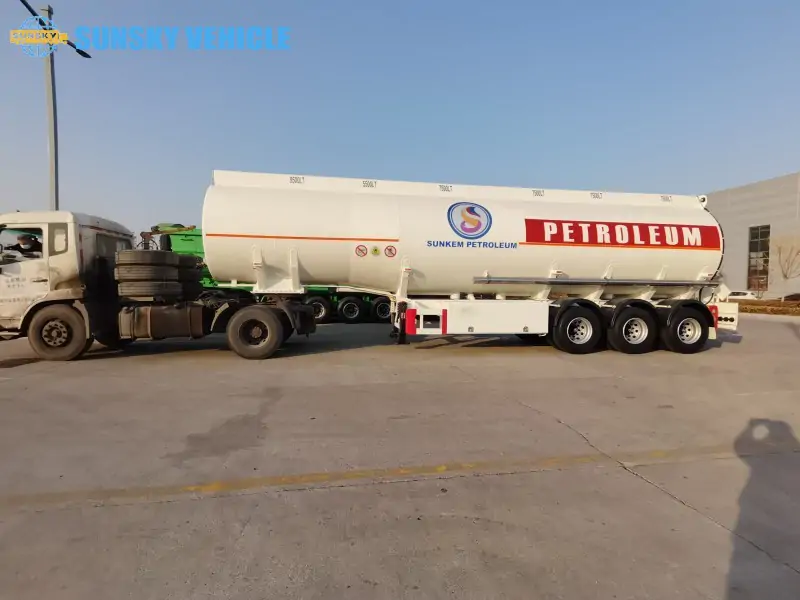
Tank Semi Trailers
Tank trailers carry liquids or certain dry bulk materials in a purpose-designed vessel. The tank material, lining, fittings, and discharge system must be compatible with the cargo.
Dump Semi Trailers
Dump trailers use a tipping body to discharge suitable loose materials, such as aggregates. Safe unloading depends on the trailer design, material behavior, ground conditions, and operating procedure.
Enclosed dry vans and refrigerated semi trailers are other common options for goods requiring weather protection or temperature control.

What Transport Jobs Are Semi Trailers Used For?
Semi trailers serve a wide range of transport applications:
- Container transport: Moving compatible containers between ports, terminals, warehouses, and inland destinations.
- Machinery transport: Carrying excavators, industrial equipment, and other machinery on a suitable lowbed or specialized trailer.
- Construction materials: Transporting steel, timber, and packaged materials on flatbeds, or suitable loose materials in dump trailers.
- Liquid transport: Carrying compatible liquids in tanks designed for the product and operating conditions.
- Bulk cargo transport: Moving suitable powders, grain, or aggregates using the appropriate bulk-handling trailer.
- General freight: Carrying packaged goods in enclosed trailers, with refrigeration where temperature control is needed.
Trailer selection should account for how cargo is loaded, secured, transported, and unloaded—not just its weight.
What Is the Difference Between a Semi Trailer and a Full Trailer?
The main difference is how the trailer’s weight is supported.
| Feature | Semi trailer | Conventional full trailer |
|---|---|---|
| Weight support during travel | Shared between the towing vehicle and trailer axles | Supported by the trailer’s own running gear |
| Typical connection | Kingpin and fifth wheel | Drawbar and towing coupling |
| Front support when disconnected | Usually landing gear | Front running gear supports the trailer |
| Typical towing vehicle | Truck tractor | Truck or another suitable towing vehicle |
These descriptions explain the general mechanical distinction. Legal definitions and permitted combinations should be checked in the destination market.
What Should You Consider Before Buying a Semi Trailer?
Start with the cargo and route, then confirm the required trailer specification.
Cargo requirements: Identify cargo weight, dimensions, center of gravity, and loading method. Concentrated machinery loads can require a different frame design from evenly distributed freight.
Road conditions: Consider gradients, tight turns, uneven surfaces, site access, and clearance restrictions. These affect trailer geometry, suspension selection, and operating suitability.
Local regulations: Check the rules for every market and route involved. Dimensions, total weight, axle loads, equipment requirements, and permits vary by jurisdiction.
Tractor compatibility: Confirm the coupling arrangement, fifth-wheel height, operating clearances, braking connections, electrical interface, and tractor ratings with an engineer.
Service support: Review parts availability, maintenance access, warranty terms, and technical support. These affect operating cost throughout the trailer’s life.
Read our for further planning.
To request a suitable specification, send the supplier your cargo details, loading method, tractor information, and intended operating routes.
Frequently Asked Questions
Can one tractor work with several semi trailers?
Yes, provided each trailer is compatible with the tractor. A fleet should confirm coupling, clearance, braking, electrical, and rating requirements before using trailers interchangeably.
Can a semi trailer be stored outdoors?
Many models are designed for outdoor operation, but storage requirements depend on the trailer and fitted equipment. Follow the manufacturer’s guidance on drainage, corrosion protection, tire care, and support conditions.
What should I check when buying a used semi trailer?
Request service records and arrange a competent inspection. Key areas include the frame, coupling components, axles, suspension, brakes, tires, landing gear, and evidence of damage or repairs.
How often does a semi trailer need maintenance?
Use the manufacturer’s schedule and applicable inspection requirements. Mileage, operating conditions, cargo, and exposure to corrosive materials can affect maintenance needs.
Can a semi trailer be modified after purchase?
Some modifications are possible, but changes to the frame, axles, body, coupling, or braking system require engineering assessment. They may also affect approval, registration, warranty, and permitted use.
What documents should I request from the supplier?
Request the final specification, operating and maintenance manuals, warranty terms, and documents needed for registration or approval in the destination market. The required documentation varies by jurisdiction.