
What Is a Freight Truck
Freight trucks are the backbone of the global logistics industry, responsible for moving the majority of goods that keep economies running. Whether it’s raw materials, industrial machinery, or finished consumer products, these vehicles serve as the essential link between manufacturers, warehouses, ports, and retailers. To fully understand the logistics power of a freight truck, we must look at what the term “freight” truly means, how these trucks differ from other vehicles, and what core components make them work efficiently.
Definition—What “Freight” Really Means in Logistics
In logistics, “freight” refers to bulk goods or cargo transported over land, sea, or air for commercial purposes.
When we talk about a freight truck, we are referring to a road vehicle designed to carry heavy or large quantities of freight, often across long distances. These trucks can transport almost any type of goods—construction materials, agricultural products, chemicals, refrigerated foods, and even oversized equipment.
Freight trucking is one of the most flexible and accessible modes of transportation. Unlike rail or sea freight, trucks can deliver cargo directly from origin to destination (door-to-door service), making them vital to both local distribution networks and international trade routes.
Difference Between Freight Trucks, Delivery Trucks, and Cargo Vans
Although these three terms are sometimes used interchangeably, they actually represent different scales and functions within logistics:
| Vehicle Type | Typical Use | Capacity & Range | Common Example |
|---|---|---|---|
| Freight Truck | Long-distance or heavy cargo transport | 10 to 40 tons | Semi-trailer, flatbed, tanker |
| Delivery Truck | Local or regional deliveries | 2 to 10 tons | Box truck, medium-duty truck |
| Cargo Van | Small shipments or last-mile delivery | < 2 tons | Sprinter van, panel van |
-
Freight trucks are built for heavy-duty, long-haul transportation. They are equipped with a tractor unit and a detachable trailer, designed to carry large or heavy cargo.
-
Delivery trucks are smaller and used mainly in urban or short-distance logistics, such as distributing goods to retail outlets or homes.
-
Cargo vans serve the final leg of delivery and are often used by courier and e-commerce companies for flexible, quick transport of small parcels.
Understanding these distinctions is essential for businesses choosing the right vehicle type for their logistics strategy.
Core Components of a Freight Truck
A modern freight truck is a highly engineered machine composed of two main parts:
-
Tractor (Cab / Power Unit)
-
The front section of the truck that houses the engine, transmission, fuel system, and driver’s cabin.
-
Provides the pulling power to move the attached trailer.
-
Can be a day cab (no sleeper berth, used for regional routes) or a sleeper cab (includes a resting compartment for long-haul drivers).
-
-
Trailer (Cargo Section)
-
The detachable container or platform is used to carry the freight load.
-
Common types include dry van, flatbed, tanker, reefer (refrigerated), and step-deck.
-
Trailers are often interchangeable, enabling logistics companies to switch loads quickly and maximize fleet utilization.
-
-
Axle Configuration
-
Axles determine the load capacity and stability of the truck.
-
Typical setups include 4×2, 6×4, or 8×4, where the first number represents total wheels and the second indicates driven axles.
-
Multi-axle trucks allow heavier payloads and better weight distribution, especially for specialized freight.
-
Common Freight Truck Capacities and Dimensions
Freight trucks come in many shapes and sizes depending on regional regulations and logistics needs. Below is a general guide to typical dimensions and weight limits:
| Truck Type | Length | Width | Height | Max Payload |
|---|---|---|---|---|
| Dry Van / Semi-Trailer | 13.6 m (45 ft) | 2.5 m | 4 m | 25–30 tons |
| Flatbed Truck | 12–14 m | 2.5 m | Variable | 20–35 tons |
| Refrigerated (Reefer) | 13 m | 2.5 m | 4 m | 25 tons |
| Tanker Truck | 11–12 m | 2.5 m | 3.5 m | 20–30 tons |
| Box Truck (Straight) | 6–8 m | 2.3 m | 3 m | 3–10 tons |
These specifications may vary based on national transport regulations, axle count, and road restrictions. For example, trucks in the U.S. and Canada often differ slightly from those in Europe or Asia in both dimension and legal payload.
Overview of How Freight Trucking Integrates into Supply Chains
Freight trucks are the connective tissue of the supply chain, linking multiple stages of production and distribution. Their integration can be summarized in three key roles:
-
Inbound Logistics – Transporting raw materials or components to manufacturing plants.
-
Outbound Logistics – Moving finished goods from factories or warehouses to distribution centers, ports, or retailers.
-
Last-Mile and Intermodal Connections—Linking with rail, air, and sea freight for multimodal transport solutions.
Modern logistics networks rely heavily on real-time tracking, route optimization, and fleet management systems to enhance the efficiency of freight trucking. As e-commerce and global trade expand, freight trucks remain the most adaptable and indispensable mode of transportation across all sectors.
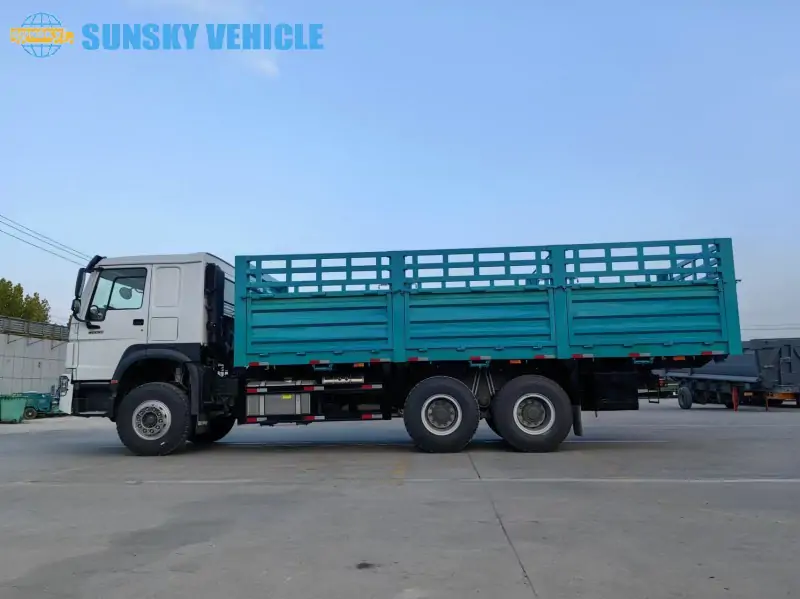
How Freight Trucks Power Global Logistics
Freight trucks play an indispensable role in the world’s logistics network. They are the most flexible and direct form of cargo transportation, bridging the gap between ports, warehouses, factories, and final consumers. In fact, more than 70% of inland freight worldwide is moved by road, underscoring how vital these vehicles are to both domestic and international trade.
The role of freight trucks in global trade
Freight trucking is the foundation of modern supply chains. Every industry—from manufacturing and construction to retail and e-commerce—depends on trucks to deliver raw materials, parts, and finished products. While ships and trains handle large-volume or intercontinental transport, only freight trucks can provide “door-to-door” delivery. They ensure goods reach destinations that other modes of transport cannot easily access, especially in developing regions with limited rail infrastructure.
Regional importance across the globe
-
In North America, freight trucking accounts for roughly three-quarters of all freight movement by value. It is the dominant mode for both short-haul and long-haul operations, connecting thousands of distribution centers.
-
In Europe, road freight serves as the main connector between countries, thanks to the continent’s extensive highway system and the EU’s single market regulations.
-
Across Asia, freight trucking is expanding rapidly as manufacturing hubs in China, India, and Southeast Asia demand faster overland transportation.
-
In Africa and the Middle East, road freight has become the backbone of regional trade, supporting mining, oil, construction, and food supply chains where rail access is limited.
Industries that rely on freight trucks
Freight trucks serve an incredibly diverse range of industries. Construction companies depend on heavy-duty trucks for building materials, mining operations use tipper and flatbed trucks for mineral transport, while retailers and e-commerce companies rely on dry vans and box trucks for fast distribution. In agriculture, refrigerated (reefer) trucks are crucial for maintaining food freshness across long distances. Even the energy sector depends on tanker trucks to move oil, fuel, and chemicals efficiently.
Key logistics functions supported by freight trucking
-
First-mile transport—picking up raw materials or goods from suppliers and taking them to production facilities.
-
Middle-mile distribution—connecting warehouses, ports, and logistics hubs across regions.
-
Last-mile delivery—moving smaller shipments directly to customers or retail points.
This multi-layered structure makes trucking essential at every stage of logistics. Without freight trucks, even the most advanced shipping or rail networks would fail to complete deliveries effectively.
The economic scale and efficiency factor
Freight trucks contribute significantly to national economies by creating jobs, enabling trade, and keeping supply chains resilient. The trucking sector also drives innovation in fuel efficiency, route planning, and load optimization. Fleet telematics, GPS tracking, and data-driven logistics platforms have transformed how companies monitor cargo and reduce idle time, improving cost control and delivery speed.
Why freight trucks remain irreplaceable
Even as alternative modes like drones and autonomous delivery systems develop, freight trucks remain irreplaceable because of their capacity, versatility, and adaptability. They can reach rural areas, navigate complex terrains, and deliver in time-critical scenarios where other transport methods are too slow or inflexible.
In short, freight trucks do more than carry cargo—they sustain economies, empower industries, and connect global markets through efficient and dependable land transport.
Major Types of Freight Trucks and Their Uses
Freight trucks come in many types and configurations, each designed to transport specific kinds of cargo efficiently and safely. Understanding their functions helps logistics managers, fleet owners, and customers choose the most suitable vehicle for their shipping needs.
Dry Van Trucks – General Freight and Non-Perishable Goods
Image suggestion: a 53-foot enclosed trailer hauling pallets or boxes.
Dry van trucks are the most common freight vehicles on the road. They feature an enclosed trailer that protects cargo from weather and damage, making them ideal for general freight such as packaged consumer goods, clothing, electronics, and furniture.
Cargo examples: palletized goods, retail merchandise, packaged food, household items.
Advantages: versatile, weatherproof, secure for most types of dry freight, suitable for long-haul and regional transport.
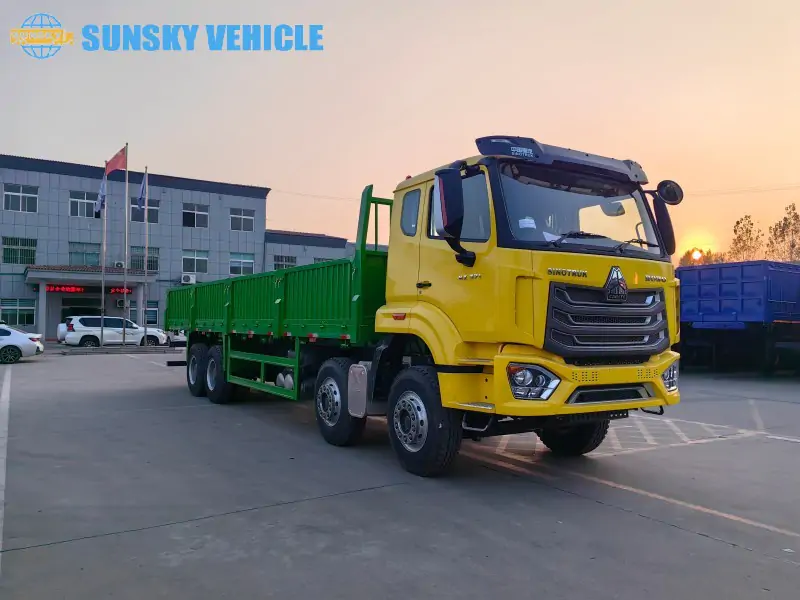
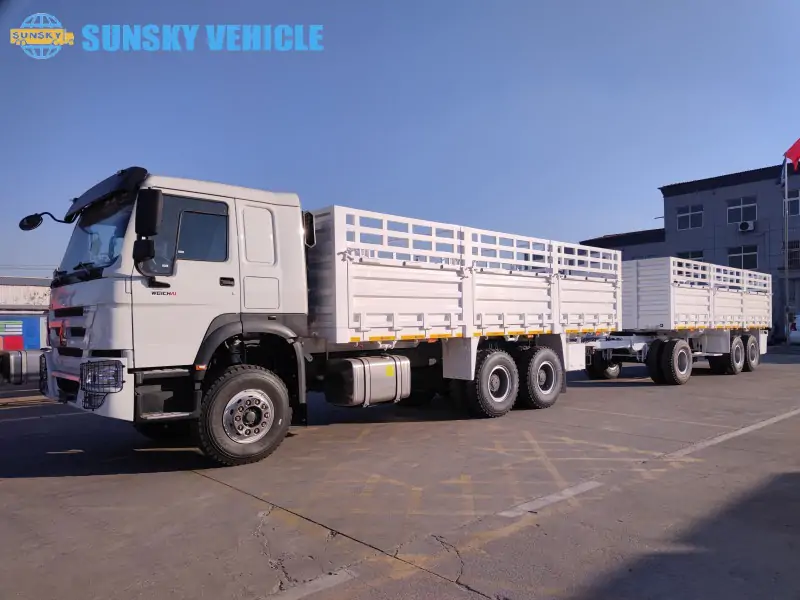
Flatbed Trucks – Oversized or Irregular Cargo
Image suggestion: open flat trailer loaded with steel beams or construction materials.
Flatbed trucks are used for large, heavy, or irregularly shaped loads that don’t fit inside enclosed trailers. Because of their open design, they allow easy side or crane loading.
Cargo examples: construction steel, lumber, pipes, machinery, large containers.
Advantages: high loading flexibility, ideal for heavy or bulky materials, can carry loads with unusual shapes or dimensions.
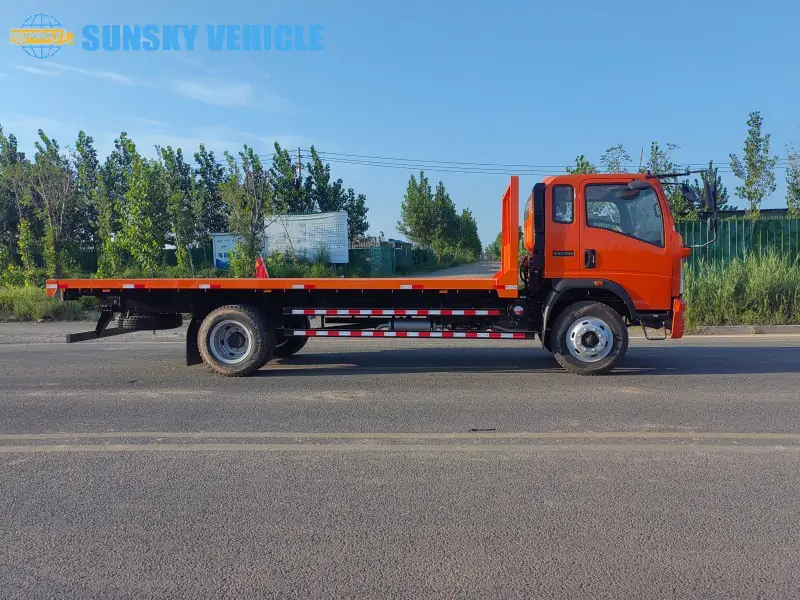
Step Deck / Drop Deck Trucks – Tall Freight and Machinery
Image suggestion: step-deck trailer transporting heavy machinery.
Step deck (also called drop deck) trucks are similar to flatbeds but have a lowered deck to accommodate taller cargo that exceeds standard height limits.
Cargo examples: construction equipment, tall crates, industrial machinery.
Advantages: allows taller loads without special permits, easier loading for heavy equipment.
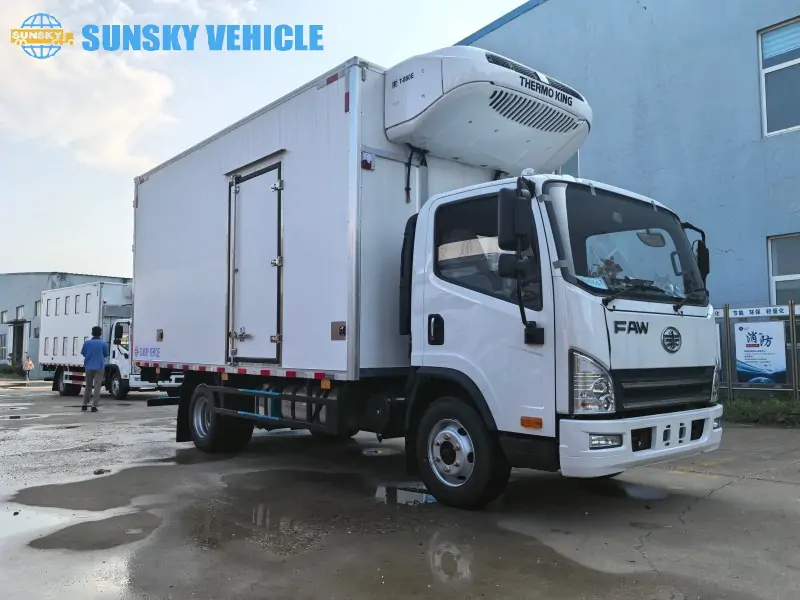
Refrigerated (Reefer) Trucks – Temperature-Controlled Goods
Image suggestion: reefer truck with refrigeration unit visible at the front.
Refrigerated trucks maintain specific temperature ranges, making them essential for industries where freshness or cold chain compliance is critical.
Cargo examples: fresh produce, dairy products, frozen foods, pharmaceuticals.
Advantages: ensures temperature stability, preserves product quality, suitable for perishable and high-value goods.
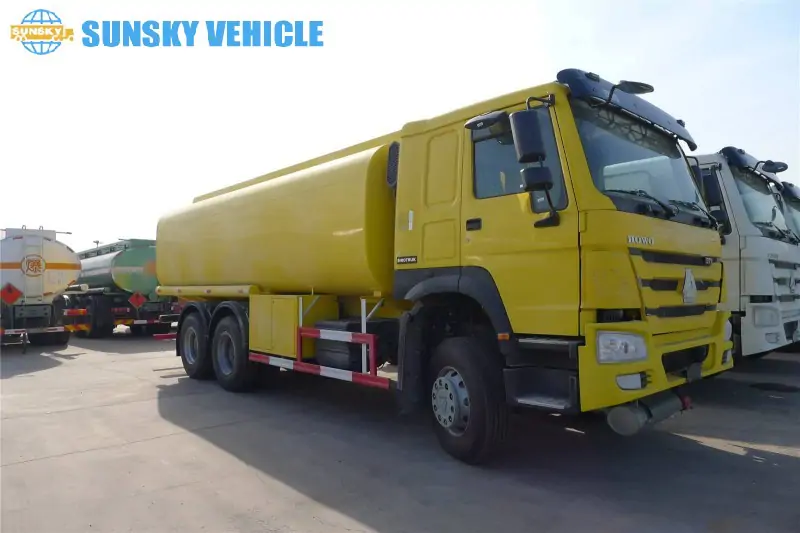
Tanker Trucks – Liquids, Fuel, and Chemicals
Image suggestion: shiny cylindrical tanker hauling petroleum or chemicals.
Tanker trucks are designed to carry liquids or gases safely. Their cylindrical tanks are built with special materials to prevent corrosion and contamination.
Cargo examples: fuel, milk, chemicals, industrial oils, liquid fertilizers.
Advantages: ideal for bulk liquid transport, ensures containment safety, available in multiple compartment designs for mixed loads.
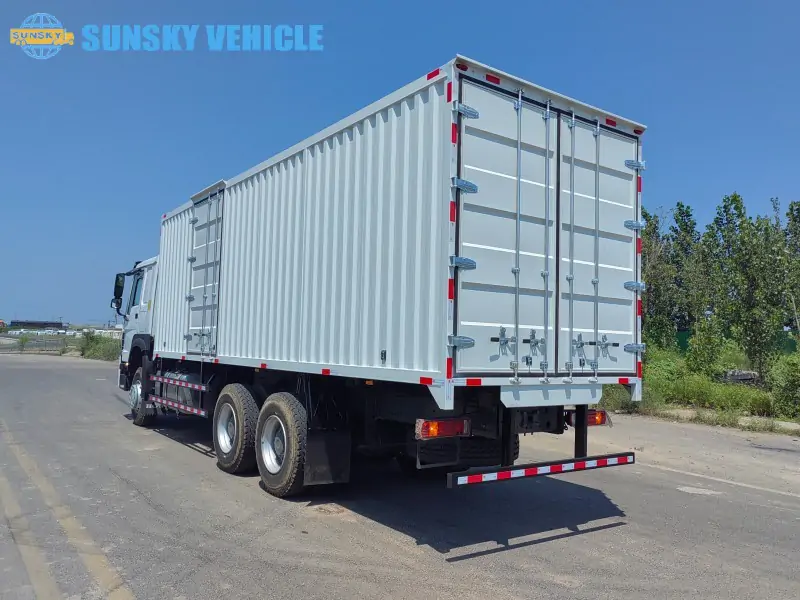
Box Trucks (Straight Trucks) – Short-Distance Freight & Last-Mile Delivery
Image suggestion: medium-sized box truck making a city delivery.
Box trucks are smaller, single-unit vehicles often used for urban and regional transport. Because the cargo area is attached directly to the cab, they’re perfect for fast and flexible distribution.
Cargo examples: furniture, appliances, retail deliveries, moving services.
Advantages: maneuverable, ideal for city driving, lower operating cost, no need for separate trailer.
Curtainside Trucks – Flexible Side-Loading Solutions
Image suggestion: truck with side curtains open, showing pallets being loaded by forklift.
Curtainside trucks combine the protection of a dry van with the loading convenience of a flatbed. Their soft curtain sides can be easily pulled back for quick loading and unloading.
Cargo examples: palletized goods, building materials, manufacturing parts.
Advantages: weather-protected, rapid side access, perfect for time-sensitive shipments.
Lowboy & Heavy Haul Trucks – Construction Equipment and Massive Cargo
Image suggestion: lowboy trailer carrying a bulldozer or excavator.
Lowboy trucks are built to carry extremely heavy or oversized loads that require extra stability. The trailer’s deck sits very close to the ground, allowing it to handle massive weights safely.
Cargo examples: construction machinery, mining equipment, power generators.
Advantages: ultra-high weight capacity, suitable for heavy-haul permits, excellent center of gravity for stability.
Container Chassis Trucks – Intermodal Freight and Port Logistics
Image suggestion: semi-truck hauling a 40-foot shipping container at a port terminal.
Container chassis trucks transport intermodal containers between ports, warehouses, and rail terminals. They are the backbone of international logistics, linking ocean and inland freight systems.
Cargo examples: 20ft/40ft containers, imported/exported goods, industrial components.
Advantages: compatible with global container standards, fast port handling, key in global supply chain integration.
Key Components and Features of a Freight Truck
A freight truck is more than just a vehicle for moving goods — it is a complex combination of power, precision engineering, and technology. Understanding each component helps logistics professionals and fleet operators optimize performance, safety, and operational cost.
Tractor: Engine Power and Cab Design
The tractor, also known as the truck head or prime mover, provides the pulling power for the freight truck. It houses the engine, transmission, and driver cab. The tractor’s performance determines how efficiently the truck can haul heavy loads over long distances.
Modern tractors are equipped with high-torque diesel or hybrid engines ranging from 350 to 600 horsepower, capable of towing trailers weighing up to 80,000 pounds (36 tons). Transmission systems often feature automated manual designs to balance fuel efficiency with torque control.
Cab design also plays a vital role. There are two main types:
-
Day cab: Compact and lightweight, ideal for short-haul or urban routes.
-
Sleeper cab: Equipped with a bed and comfort features for long-distance drivers.
Ergonomic dashboards, air suspension seats, and noise reduction technology have become standard, improving both driver comfort and safety.
Trailer: Detachable, Multi-Axle, and Specialized Models
The trailer is the cargo-carrying section of the freight truck. It is detachable from the tractor, allowing flexibility across different freight types and operational needs. Trailers come in various designs such as dry vans, flatbeds, reefers, tankers, and container chassis, each tailored for specific cargo.
The number of axles (usually between two and five) determines how much weight a trailer can legally and safely carry. Multi-axle systems distribute load pressure evenly, reducing road wear and improving braking performance.
Specialized trailer models include extendable flatbeds for oversized cargo, insulated reefers for perishable goods, and pressurized tankers for chemical transport. Each trailer type follows strict safety and engineering standards to ensure secure cargo handling.
Load Securing Systems: Chains, Straps, and Tarps
Proper load securing is essential for safe freight movement. Without adequate restraint systems, cargo can shift during transit, causing accidents or product damage.
Common securing equipment includes:
-
Chains: Used for heavy machinery and steel cargo, providing maximum strength.
-
Ratchet straps: Ideal for lighter or palletized goods, offering quick tension adjustment.
-
Tarps and covers: Protect open-deck loads like lumber or metal coils from weather exposure.
Advanced fleets also use load monitoring sensors to detect shifts in cargo balance and send real-time alerts to drivers or dispatch centers.
Technology Integrations: GPS, Telematics, and IoT Sensors
Technology is transforming freight trucking into a data-driven industry. Telematics systems combine GPS tracking, driver behavior monitoring, and route optimization tools to improve efficiency and reduce downtime.
GPS navigation provides real-time route updates to avoid congestion, while IoT sensors monitor tire pressure, fuel usage, cargo temperature, and engine performance. This integration helps fleet managers predict maintenance needs and optimize delivery schedules.
Modern freight trucks are also equipped with electronic logging devices (ELDs) to record driving hours automatically, ensuring compliance with road safety regulations.
Together, these innovations increase operational transparency, reduce fuel costs, and enhance reliability for both carriers and customers.
Emission Standards and Engine Efficiency
As global regulations tighten, freight trucks are evolving toward cleaner and more fuel-efficient designs. Many countries now enforce Euro VI, EPA, or Bharat Stage VI emission standards, limiting nitrogen oxide (NOx) and particulate emissions.
Engine manufacturers are developing low-emission diesel, LNG, CNG, and hybrid powertrains, while electric trucks are beginning to gain market share in regional and short-haul logistics.
Aerodynamic cab shapes, lightweight materials, and energy recovery systems further enhance fuel economy, lowering total operating costs and reducing carbon footprints.
Freight trucking is entering a new era where sustainability and performance coexist — fleets that adopt these technologies not only meet environmental standards but also gain a competitive edge in global logistics.
How to Choose the Right Freight Truck for Your Business
Selecting the right freight truck is one of the most critical decisions for logistics operators, manufacturers, and distributors. The correct vehicle type not only ensures efficient cargo transport but also minimizes operational costs, improves delivery reliability, and complies with industry regulations. Here’s a detailed guide on how to make the best choice for your business needs.
Match Truck Type to Cargo Weight, Volume, and Fragility
The starting point in choosing a freight truck is understanding your cargo’s characteristics — weight, dimensions, and sensitivity.
-
Heavy or oversized loads such as construction equipment or steel coils are best suited for flatbed or lowboy trucks, which can handle irregular shapes and extreme weights.
-
Temperature-sensitive products like food, medicine, or chemicals require refrigerated (reefer) trucks to maintain strict cold-chain standards.
-
Liquid or hazardous cargo should be moved using tanker trucks with specialized linings and pressure control systems.
-
For general packaged goods and dry materials, dry van trucks offer secure, weatherproof transport.
-
Last-mile deliveries or smaller loads benefit from box trucks that provide flexibility in urban environments.
Choosing the right truck ensures cargo integrity, prevents damage, and reduces logistics inefficiencies across the supply chain.
Evaluate Route Conditions and Distance
Different routes demand different truck configurations. Long-haul operations often involve highways, cross-border routes, and varying terrain, which means powerful tractors with sleeper cabs and multi-axle trailers are more suitable.
Short-distance or regional deliveries, on the other hand, benefit from day cabs and lighter trucks that can maneuver through cities or industrial parks easily.
If the route includes mountainous or unpaved roads, it’s important to choose trucks with enhanced suspension, strong braking systems, and reinforced tires. Businesses operating across multiple regions should also check axle load regulations, as they differ from one country or state to another.
Cost of Ownership vs. Leasing or Outsourcing
When planning a fleet, companies must weigh the total cost of ownership (TCO) against leasing or outsourcing options.
-
Buying a truck fleet offers long-term control and customization but requires higher upfront capital and ongoing maintenance costs.
-
Leasing provides flexibility and predictable monthly payments, suitable for businesses with fluctuating demand.
-
Outsourcing to a logistics provider eliminates maintenance and compliance concerns, allowing companies to focus on core operations.
In addition, fuel efficiency, repair costs, insurance, and driver wages all impact TCO. Conducting a detailed cost-benefit analysis helps ensure sustainable profitability over time.
Compliance and Driver Licensing (CDL and Permits)
Freight transport is governed by strict compliance rules to ensure road safety and cargo security. Operators must verify that both trucks and drivers meet national and international licensing requirements.
Drivers handling large commercial vehicles typically require a Commercial Driver’s License (CDL), and additional endorsements may be needed for hazardous materials (HazMat) or tanker operations.
Fleet owners should also maintain valid vehicle permits, insurance, and inspection certificates, especially for cross-border shipments. Non-compliance can result in fines, shipment delays, or revoked licenses.
Environmental and Fuel Considerations (Diesel, LNG, EVs)
With rising environmental awareness and fuel costs, many companies are rethinking their fleet energy strategy. Traditional diesel engines remain dominant due to their torque and refueling infrastructure, but alternatives are gaining traction:
-
Liquefied Natural Gas (LNG) and Compressed Natural Gas (CNG) trucks reduce CO₂ and particulate emissions, making them ideal for fleets seeking greener operations.
-
Hybrid and electric freight trucks (EVs) are emerging as viable options for short to mid-range routes, offering lower operating costs and zero tailpipe emissions.
-
Government incentives and emission regulations in many regions make it increasingly beneficial to adopt cleaner fuel technologies.
Evaluating the trade-offs between fuel efficiency, range, maintenance, and infrastructure availability is crucial for building a future-ready logistics fleet.
Choosing the right freight truck is not just about capacity — it’s about aligning performance, compliance, and sustainability with your business strategy. A well-matched fleet improves reliability, reduces costs, and strengthens your brand’s reputation for responsible logistics.
Freight Truck Costs and Operating Economics
Understanding the costs and economics of freight trucking is essential for any business involved in logistics, shipping, or fleet management. Operating a freight truck involves multiple cost factors, from initial purchase to daily operations. Managing these effectively can significantly improve profitability and efficiency.
Purchase and Depreciation
The initial investment in a freight truck is substantial. Heavy-duty trucks, such as tractor-trailers or specialized tankers, can cost anywhere from $80,000 to over $150,000 per unit, depending on engine power, trailer type, and technology features.
Depreciation is another critical factor. Freight trucks typically lose 20–25% of their value in the first three years. Choosing a truck with a durable engine, reliable components, and good resale value can help mitigate depreciation losses. Proper maintenance and careful usage also extend a truck’s operational lifespan, reducing the need for frequent replacement.
Fuel Consumption and Maintenance Costs
Fuel is one of the largest recurring expenses in trucking. A typical long-haul diesel truck consumes 6–8 miles per gallon (mpg), depending on load, terrain, and driving habits. Alternative fuels like LNG, CNG, or hybrid systems may reduce fuel costs while also meeting environmental regulations.
Maintenance costs include routine servicing, tires, brakes, and unexpected repairs. Regular inspections and preventative maintenance help avoid downtime and expensive emergency repairs. On average, a heavy-duty freight truck may incur $15,000–$20,000 annually in maintenance and repairs, depending on usage and fleet size.
Insurance and Permits
Freight trucking involves insurance premiums to protect both the vehicle and cargo. Insurance costs depend on vehicle type, route, cargo value, and driver experience. For hazardous or high-value loads, specialized coverage is often required.
Permits and regulatory compliance also carry costs. Oversize or overweight loads require special permits, and cross-border shipments may require additional documentation. Budgeting for insurance and permits is essential to avoid fines or shipment delays.
Cost Comparison: Short Haul vs. Long Haul
Operating costs vary depending on the distance and type of route:
-
Short-haul trucking (within 100–300 miles) typically uses smaller trucks or day-cab tractors. Fuel and maintenance costs per mile are lower, but labor costs may be higher due to frequent stops and traffic congestion.
-
Long-haul trucking (over 500 miles) benefits from larger tractors and sleeper cabs. Fuel efficiency per mile improves with consistent highway driving, but costs for driver wages, lodging, and long-term maintenance are higher.
Analyzing route types helps fleet managers optimize vehicle allocation and reduce total operating expenses.
Cost-Efficiency Tips for Fleet Operators
-
Route Optimization: Use GPS and telematics to reduce fuel consumption and delivery time.
-
Preventative Maintenance: Schedule regular service to avoid costly breakdowns.
-
Driver Training: Encourage fuel-efficient driving practices to lower consumption and wear.
-
Fleet Size Management: Match truck types to load requirements to avoid underutilization.
-
Technology Integration: Implement fleet management software to track costs, monitor performance, and predict maintenance needs.
-
Alternative Fuels: Explore hybrid or LNG-powered trucks for cost and emission reduction.
By carefully managing purchase, fuel, maintenance, insurance, and operational practices, freight operators can maintain a profitable, efficient, and sustainable fleet in both regional and long-haul operations.
Advantages and Limitations of Freight Trucking
Freight trucking remains a cornerstone of the global logistics industry. While it offers numerous advantages, it also faces challenges that fleet operators and businesses must consider. Understanding both sides helps companies optimize operations and plan for sustainable growth.
Advantages
-
High Flexibility and Accessibility
Freight trucks can access locations that other transport modes, such as rail or sea, cannot reach. They can navigate rural roads, industrial sites, and urban streets, providing unmatched flexibility in delivering cargo directly to its destination. -
Door-to-Door Delivery
One of the strongest advantages of freight trucking is its ability to provide end-to-end delivery. From manufacturer to warehouse, retail store, or customer doorstep, trucks eliminate the need for intermediate handling and reduce transit times. -
Cost-Effectiveness for Regional Transport
For short- and medium-distance shipments, trucks are often more economical than rail or air freight. They require less infrastructure investment and can consolidate multiple shipments efficiently, reducing per-unit shipping costs. -
Vital for Perishable and Time-Sensitive Goods
Refrigerated trucks, specialized trailers, and fast delivery schedules make freight trucking indispensable for goods that must maintain freshness or arrive on a strict timeline, such as food, pharmaceuticals, and high-value electronics.
Limitations
-
Rising Fuel and Labor Costs
Fuel consumption and driver wages represent significant portions of operating expenses. Fluctuations in diesel prices or shortages of skilled drivers can increase costs and affect service reliability. -
Environmental Impact
Despite improvements in engine efficiency and the emergence of electric and LNG-powered trucks, freight trucking still contributes substantially to greenhouse gas emissions and air pollution, particularly on long-haul routes. -
Infrastructure and Border Challenges
Trucks rely heavily on road networks. Poor infrastructure, congested highways, tolls, and border checkpoints can delay shipments and increase operating costs, especially for international transport. -
Driver Shortages
The trucking industry faces a global shortage of qualified drivers, which can limit fleet expansion, increase labor costs, and reduce overall delivery capacity. Companies are investing in automation, recruitment, and training programs to address this challenge.
Freight trucking offers unmatched flexibility and essential delivery capabilities, making it vital for modern supply chains. However, businesses must carefully manage costs, compliance, and environmental factors to maintain operational efficiency and sustainability in a competitive market.
Global Trends Transforming the Freight Trucking Industry
The freight trucking industry is undergoing significant transformations as technology, environmental concerns, and global trade dynamics reshape logistics operations. Understanding these trends is crucial for businesses, fleet operators, and logistics planners aiming to remain competitive in a rapidly evolving market.
Electrification and Alternative Fuels (EV Trucks, Hydrogen)
One of the most notable trends is the shift toward clean energy trucks. Electric freight trucks are increasingly being adopted for regional and urban deliveries due to zero tailpipe emissions and lower operational costs. Hydrogen fuel cell trucks are emerging as a viable solution for long-haul freight, offering extended range and rapid refueling compared to battery-electric vehicles.
Governments around the world are incentivizing the adoption of low-emission and zero-emission vehicles, helping companies reduce carbon footprints while complying with increasingly strict emission standards.
Automation and Driver-Assist Technology
Automation is changing the way freight trucks operate. Driver-assist systems, including adaptive cruise control, lane-keeping assistance, collision detection, and emergency braking, enhance safety and reduce driver fatigue.
Looking ahead, semi-autonomous and fully autonomous trucks are being tested for highway transport. These innovations have the potential to reduce labor shortages, increase fuel efficiency, and optimize delivery schedules, while still maintaining safety standards.
Smart Logistics and Real-Time Tracking
Digital technologies are transforming fleet management and logistics operations. Telematics, GPS tracking, and IoT sensors allow companies to monitor cargo conditions, vehicle health, and driver behavior in real time.
Smart logistics platforms integrate route planning, predictive maintenance, and automated reporting, enabling companies to minimize delays, reduce fuel consumption, and enhance customer satisfaction. These systems also provide valuable data for strategic decision-making and long-term fleet optimization.
Sustainability Regulations and Green Logistics
Global emphasis on sustainability is shaping freight trucking practices. Regulations targeting emissions, fuel efficiency, and environmental compliance are becoming stricter in regions such as North America, Europe, and Asia.
Companies are adopting green logistics strategies, such as optimizing delivery routes to reduce fuel use, retrofitting older trucks with energy-efficient technology, and investing in electric or alternative-fuel fleets. Sustainable logistics not only reduces environmental impact but also enhances brand reputation and market competitiveness.
Global Opportunities: Africa, Middle East, and Southeast Asia Logistics Growth
Emerging markets are driving new opportunities in freight trucking.
-
In Africa, trucking is critical for connecting rural areas, mining operations, and industrial hubs with ports and urban centers.
-
The Middle East is experiencing logistics growth driven by oil and gas, construction, and e-commerce, requiring modernized fleets and specialized trucks.
-
Southeast Asia sees rapid expansion in manufacturing, e-commerce, and cross-border trade, boosting demand for reliable road freight and innovative logistics solutions.
These regions represent high-growth markets where efficient, adaptable freight trucking can have a major impact on supply chain performance and regional economic development.
Freight trucking is evolving at a rapid pace. Companies that embrace electrification, automation, digital integration, and sustainable practices are best positioned to thrive in the global logistics landscape, meeting both market demand and environmental responsibilities.
Freight Truck Regulations and Safety Standards
Compliance with regulations and adherence to safety standards are critical in the freight trucking industry. These rules protect drivers, cargo, and other road users while ensuring efficient and lawful operation across regions. Businesses and fleet operators must stay informed to avoid fines, delays, or legal complications.
Licensing Requirements (CDL and Endorsements)
Operating a freight truck requires a Commercial Driver’s License (CDL) in most countries. The CDL ensures that drivers possess the necessary skills to handle large, heavy vehicles safely.
Additional endorsements may be required depending on the type of cargo:
-
Hazardous Materials (HazMat) for transporting chemicals, fuel, or explosives.
-
Tanker Endorsement for liquid cargo.
-
Double/Triple Trailer Endorsements for multi-trailer operations.
Driver training and licensing requirements vary by country or state, but compliance is mandatory for both domestic and international freight operations.
Load Limits and Road Regulations
Freight trucks must adhere to strict weight and dimension limits to ensure road safety. Overloaded or oversized trucks can damage infrastructure, reduce vehicle control, and increase accident risk.
-
Maximum Gross Vehicle Weight (GVW) regulations differ by region.
-
Height, width, and length restrictions ensure safe passage under bridges and through tunnels.
-
Special permits are often required for oversized or overweight cargo.
Adhering to these regulations is essential to avoid fines, shipment delays, and insurance issues.
Maintenance and Inspection Protocols
Regular vehicle maintenance is mandated by law in many countries. Routine inspections cover:
-
Brakes and suspension systems
-
Tires and wheel assemblies
-
Engine and exhaust systems
-
Lights, mirrors, and signaling devices
Compliance with maintenance schedules not only ensures roadworthiness but also extends truck life, reduces fuel consumption, and minimizes unexpected downtime. Many fleet operators use digital logs and telematics to track inspections and service intervals.
Driver Safety and Rest Hour Laws (HOS Regulations)
Driver fatigue is a major risk in freight trucking. Hours of Service (HOS) regulations set limits on how long drivers can operate vehicles without rest. These rules vary by region but generally include:
-
Maximum daily and weekly driving hours
-
Mandatory rest periods and breaks
-
Record-keeping requirements, often via Electronic Logging Devices (ELDs)
Compliance reduces accidents, protects driver health, and ensures consistent delivery schedules.
Adhering to freight truck regulations and safety standards is essential for legal compliance, operational efficiency, and long-term sustainability. Companies that invest in driver training, vehicle maintenance, and regulatory compliance enjoy safer operations, lower insurance costs, and improved reputation in the logistics market.
Frequently Asked Questions
What is the difference between a freight truck and a semi truck?
A freight truck is a general term for any truck used to transport cargo, whereas a semi truck specifically refers to a tractor unit attached to a semi-trailer. Essentially, all semi trucks are freight trucks, but not all freight trucks are semi trucks. Semi trucks are designed for long-haul and heavy-duty transport, offering higher payload capacity and intermodal compatibility.
How much weight can a freight truck carry?
The weight a freight truck can carry depends on its type, axle configuration, and regional regulations. Typical dry van or flatbed trucks can carry 20–30 tons, while specialized heavy-haul trucks or lowboys can transport 50 tons or more. Always ensure the truck adheres to legal Gross Vehicle Weight (GVW) limits to avoid fines and maintain road safety.
What are the most common types of freight trucks used today?
The most widely used freight trucks include:
-
Dry van trucks for general cargo
-
Flatbed trucks for oversized or irregular loads
-
Refrigerated (reefer) trucks for perishable goods
-
Tanker trucks for liquids and chemicals
-
Box trucks for short-distance or last-mile delivery
-
Step deck, curtainside, and lowboy trucks for specialized cargo
These trucks are selected based on cargo type, distance, and logistical requirements.
How do freight trucks differ across regions (US vs. Asia vs. Africa)?
Freight trucks vary significantly by region due to regulations, road infrastructure, and logistics needs.
-
US: Large long-haul semi trucks with high payload capacity dominate, often used for inter-state transport.
-
Asia: Trucks are smaller or mid-sized in urban areas, but heavy-duty models serve industrial corridors. Local regulations often limit length, height, and axle load.
-
Africa: Trucks must handle rough terrain and long distances. Heavy-duty off-road and flatbed trucks are common, especially in mining and agricultural transport.
Are electric freight trucks the future of logistics?
Electric freight trucks are gaining momentum, especially for urban and regional deliveries. EV trucks offer lower emissions, reduced fuel costs, and quieter operation. Hydrogen fuel cell trucks may complement EVs for long-haul operations. While infrastructure and battery technology are still developing, clean energy trucks are expected to play a major role in the future of logistics.
How do I choose the best freight truck for my cargo type?
Consider the following when choosing a truck:
-
Cargo weight, volume, and fragility
-
Route conditions and distance
-
Cost of ownership vs. leasing or outsourcing
-
Compliance requirements and driver licensing
-
Environmental and fuel efficiency considerations
Matching truck type to cargo and operational needs ensures safety, efficiency, and cost-effectiveness.
How do freight trucking costs compare to rail or sea freight?
Freight trucking is generally more flexible and faster than rail or sea transport, especially for regional or time-sensitive deliveries. However, trucking can be more expensive per ton-mile for very large or long-distance shipments. Rail and sea freight are more cost-effective for bulk cargo, but they require additional handling and intermodal transfer. Many logistics companies use a combination of trucking, rail, and sea to optimize speed and cost.
Conclusion
Freight trucks are the backbone of modern trade, connecting manufacturers, warehouses, retailers, and consumers across the globe. They enable efficient, flexible, and reliable cargo movement, whether for heavy industrial goods, perishable products, or time-sensitive deliveries. Understanding their types, components, and operating requirements allows businesses to optimize logistics, reduce costs, and improve supply chain efficiency.
To stay competitive in today’s fast-paced market, companies should strategically choose the right freight trucks for their cargo, routes, and operational needs. Leveraging modern technologies, compliance strategies, and sustainable practices ensures that your fleet remains efficient and future-ready.
-
Explore our range of container and flatbed trailers here.
-
Contact us for a customized freight solution for your region.
-
Learn more through our related posts on trailer types, logistics optimization, and fleet management.
-
Discover our product and brand landing pages for full specifications and offerings.
By aligning your freight operations with the right equipment, technology, and strategy, your business can achieve maximized efficiency, reduced costs, and improved service quality across all logistics operations.