
In the world of heavy hauling, when a standard dry van just won’t cut it, the Flatbed Truck steps in as the indispensable solution. From colossal steel beams on a construction site to complex machinery destined for an oil field, the flatbed is the workhorse for transporting over-dimensional, overweight, or oddly shaped cargo. They are a critical link in the supply chain, ensuring essential projects in industries like construction, manufacturing, and energy can move forward smoothly.
This guide will dive deep into the flatbed truck’s definition, detailed types, professional load specifications, and most importantly, the federally mandated methods for cargo securement, providing you with a comprehensive professional reference.
What is a Flatbed Truck?
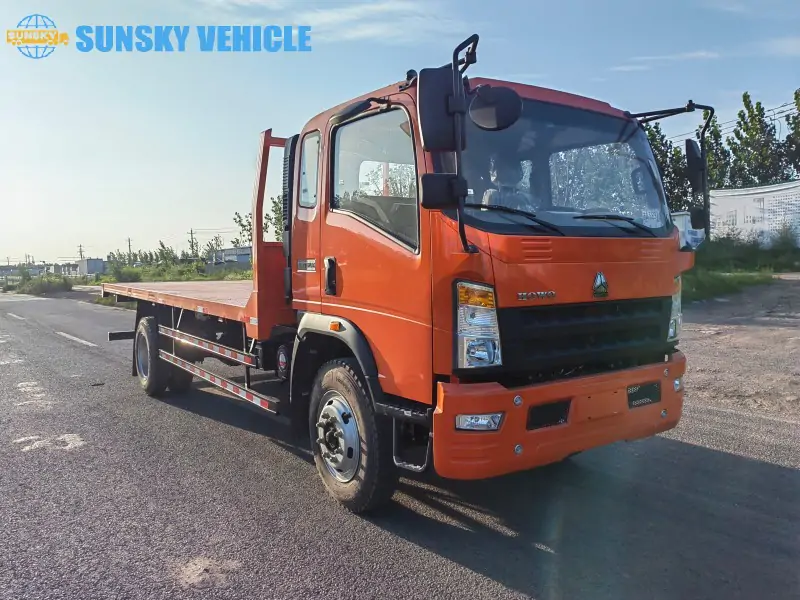
A flatbed truck is a uniquely designed commercial vehicle engineered to maximize loading flexibility and payload capacity.
Core Definition
A flatbed truck is a type of truck or semi-trailer with a completely open, flat freight platform (the “deck” or “bed”) that lacks fixed side walls and a roof.
This design allows cargo to be loaded directly from above using a crane or from the side using a forklift, greatly simplifying the loading and unloading process for large and non-standard freight.
Core Features
| Feature | Description | Advantage/Function |
|---|---|---|
| Open Deck | The deck is fully exposed, with no railings or roof. | Allows for unrestricted loading and unloading from the top, side, or rear. |
| Rigid Design | The body structure is robust and built to withstand high-intensity, high-density loads. | Ensures structural stability when transporting heavy machinery and building materials. |
| Loading Aids | Often equipped with or connectable to loading ramps, winches, and tie-down devices. | Enhances the efficiency and safety of loading heavy, non-self-propelled equipment. |
| Flexible Securement Points | The edges of the deck usually feature rub rails and stake pockets. | Provides flexible and ample cargo securement points to comply with DOT/FMCSA safety regulations. |
| Load Capacity | Due to reduced trailer weight, the payload capacity is typically higher. | Capable of carrying extremely heavy single-piece loads of large machinery or raw materials. |
Major Flatbed Truck Types and Specifications
Selecting the correct flatbed trailer is crucial for compliance and safety. The primary determinant is the dimensions and weight of the freight. Below is a detailed breakdown of the most common flatbed types, their standard specifications, and their ideal applications.
| Trailer Type | Key Features | Length (Avg.) | Max Legal Capacity (Avg.) | Best For |
|---|---|---|---|---|
| Standard Flatbed | Single, continuous deck surface; most common type. | 48 ft. to 53 ft. | Up to 48,000 lbs. | Construction materials, packaged lumber, steel coils, and palletized cargo that can withstand weather. |
| Step-Deck (Drop Deck) | Features two deck levels: a higher front deck and a lower rear deck. | Lower Deck: 38-40 ft. | Up to 45,000 lbs. | Taller cargo (up to 10 ft. 2 in.) that would exceed the 13.5 ft. height limit on a standard flatbed. |
| Removable Gooseneck (RGN) | The front section (gooseneck) detaches, allowing the trailer to drop to the ground level. | Well/Deck: 29 ft. | 42,000 lbs. (standard 3-axle) | Heavy, self-propelled machinery and equipment (excavators, dozers) that can be driven directly onto the deck. |
| Stretch Flatbed | Telescoping frame allows the deck length to be extended hydraulically. | Can extend up to 80 ft. | Capacity varies, typically 43,000 lbs. | Extremely long cargo such as wind turbine blades, utility poles, or bridge beams. |
Commercial Flatbed Truck Size & Weight Limits
All commercial trucks must adhere to strict federal and state regulations set by the Department of Transportation (DOT) and the Federal Motor Carrier Safety Administration (FMCSA). Exceeding these limits is illegal and requires special, often costly, permits.
-
- GVWR (Gross Vehicle Weight Rating): The maximum legal weight for a standard 5-axle tractor-trailer combination is generally 80,000 lbs. Exceeding this requires special overweight permits and route planning.
- Max Standard Width: Standard legal loads cannot exceed 8.5 feet (102 inches) wide.
- Max Standard Height: Standard legal loads generally cannot exceed 13.5 feet (total vehicle height from the ground).
- Axle Weight Limits: Weight must be distributed correctly to prevent exceeding individual axle limits (e.g., typically 12,000 lbs on the steer axle and 34,000 lbs on tandem axles).
Flatbed vs. Dry Van vs. Conestoga: Which Trailer Is Right for Your Load?
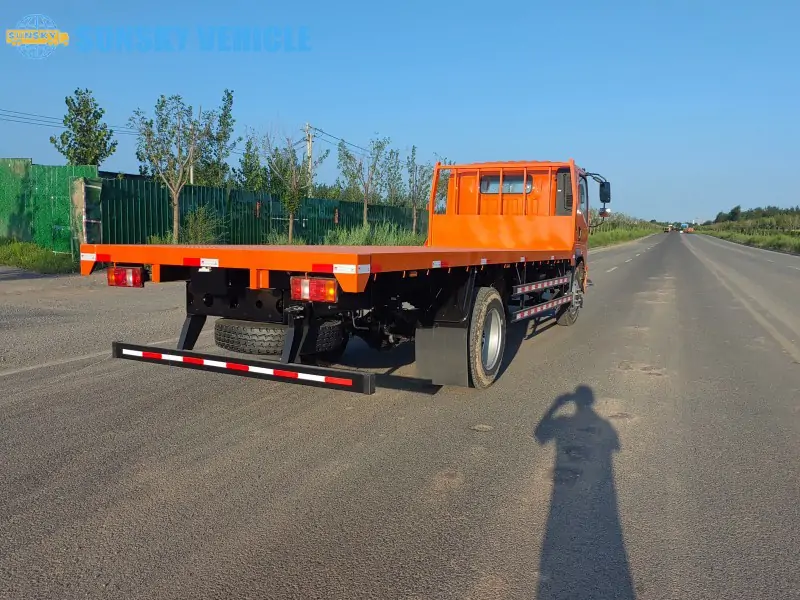
Choosing the correct trailer type is the first critical step in ensuring efficient and compliant transportation. While the flatbed is known for its versatility, it’s essential to compare it against two other common trailer types: the enclosed dry van and the specialized Conestoga.
| Trailer Type | Weather Protection | Loading Method | Best for Cargo | Key Trade-off |
|---|---|---|---|---|
| Dry Van (Box Trailer) | Excellent (Fully enclosed) | Rear-door dock loading, side-door (less common). | Palletized, standard-size, high-value, weather-sensitive goods (e.g., consumer goods, electronics). | Cannot handle over-dimensional freight. |
| Standard Flatbed | None (Requires Tarping) | Crane, Forklift (Side/Top), Ground (RGN). | Over-dimensional, heavy machinery, raw materials, and weather-resistant goods. | Cargo is exposed and requires mandatory securement devices (chains, straps). |
| Conestoga (Rolling Tarp System) | Excellent (Fully enclosed) | Crane, Forklift (Side/Top) once the tarp system is rolled back. | Weather-sensitive but oversized goods that must be loaded from above (e.g., finished aerospace parts, large machine tools). | Higher operating cost and lower internal clearance than a standard flatbed. |
Why is Open-Deck Transport Necessary?
The necessity of open-deck transport is driven by the dimensional and weight constraints of the cargo itself. In these scenarios, a flatbed is not just an option—it is the only solution.
- Non-Standard Dimensions: Flatbeds are required for any cargo that is too tall, too wide, or too long to fit into a standard 8.5-foot-wide dry van. This includes construction elements like long pipe sections, prefabricated walls, or massive tanks.
- Crane and Lift Access: Many industrial projects require cargo to be delivered directly to a job site where it must be immediately lifted and installed by a crane. Since dry vans prevent vertical access, flatbeds allow for efficient, immediate top-down unloading, saving significant time and labor.
- Heavy or Dense Cargo: While dry vans are designed for volume, flatbeds are structurally optimized for dense weight. Items like solid steel coils, large industrial engines, or heavy concrete barriers often max out the weight limits of a truck, and the robust, open design of the flatbed is better suited to handle and secure these forces.
- Self-Propelled Equipment: Heavy machinery such as bulldozers, excavators, or agricultural tractors often needs to be driven directly onto the trailer. Specialized flatbeds like the RGN facilitate ground-level loading, eliminating the need for separate lifting equipment.
Mastering Flatbed Cargo Securement: Legal Requirements and Best Practices
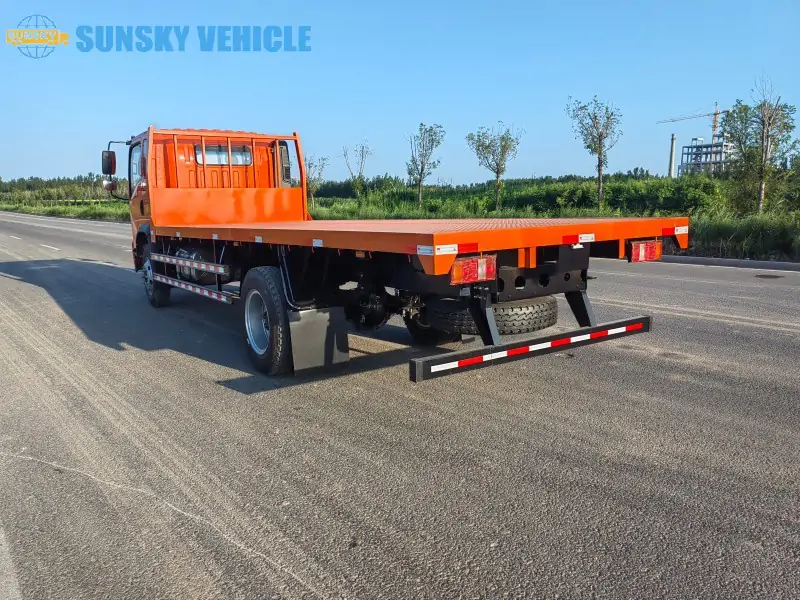
Cargo securement is arguably the most critical and complex part of flatbed transport. Unlike dry vans, where walls provide structural support, flatbed cargo relies entirely on the securement devices (chains, straps, binders) to prevent movement. Failure to properly secure a load is not only a massive safety risk but is also a direct violation of the Federal Motor Carrier Safety Administration (FMCSA) regulations (specifically 49 CFR Part 393, Subpart I), leading to severe fines and out-of-service orders.
The General Rule for Securement
FMCSA regulations are built around a key principle: the cargo securement system must be capable of withstanding forces in all directions—forward, rearward, and lateral (side-to-side)—under all driving conditions. The effectiveness of the system is measured by the Aggregate Working Load Limit (WLL), which is the sum of the WLL of all tie-downs used. This aggregate WLL must meet or exceed the required force.
- Forward Movement: The system must withstand a force equal to 0.8g (80% of the cargo weight) when braking.
- Rearward Movement: The system must withstand 0.5g (50% of the cargo weight) when accelerating or climbing a hill.
- Lateral Movement (Side-to-Side): The system must withstand 0.5g (50% of the cargo weight) when turning or changing lanes.
The Essential Flatbed Securement Checklist (Based on DOT/FMCSA)
Compliance with securement rules requires careful application of tie-downs based on the weight and length of the cargo.
- Tie-Down Quantity (General Cargo): The number of tie-downs is mandated by the cargo’s dimensions and weight:
- Cargo under 5 feet long AND under 1,100 lbs: Requires at least 1 tie-down.
- Cargo under 5 feet long AND over 1,100 lbs: Requires 2 tie-downs.
- Cargo between 5 and 10 feet long (regardless of weight): Requires at least 2 tie-downs.
- Cargo over 10 feet long: Requires 2 tie-downs for the first 10 feet, plus 1 additional tie-down for every additional 10 feet (or fraction thereof).
- Load Distribution: Ensure the cargo’s weight is distributed evenly across the trailer axles to remain compliant with the 80,000 lb GVWR and individual axle weight limits.
- Securement Device Inspection: All chains, straps, and hardware (ratchets, binders) must be free from defects, cracks, or excessive wear. Never use knotted or damaged webbing.
- Edge Protection: Use edge protection (corner protectors/sleeves) on all sharp or abrasive edges of the cargo. This protects the tie-downs from damage and is essential for compliance.
- Placement and Angling: Tie-downs must be positioned and angled to provide tension on the cargo equally, preventing shifting in any direction (front, rear, side). Cross-pattern chaining is highly effective for maximizing lateral stability.
- Load Check Mandate: The driver must check the securement system before driving, again within the first 50 miles of the trip, and whenever there is a change of duty status or driving after an abrupt change in road conditions (e.g., leaving city limits and hitting the interstate).
Flatbed Trucking Rates: Factors That Affect Your Shipping Cost
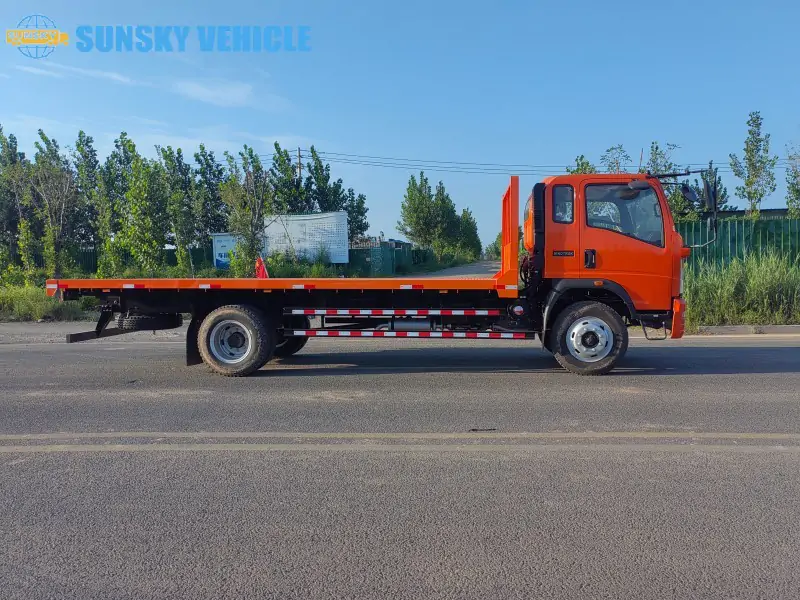
Flatbed shipping is a complex logistics service, and its pricing is highly dynamic. Unlike consistent dry van rates, flatbed costs fluctuate significantly due to the specialized nature of the equipment, the added labor for securement and tarping, and the mandatory regulatory requirements for oversized and overweight loads. Understanding these variables is key to budgeting your transport operations effectively.
Core Cost Drivers (Per-Mile Rate)
The foundation of any flatbed quote is the base cost per mile, which is influenced by market conditions:
- Distance and Fuel: The total mileage is the primary factor, always subject to a Fuel Surcharge (FSC), which adjusts based on the fluctuating national average diesel price (as tracked by the EIA).
- Lane Demand and Direction: Rates are heavily impacted by imbalance. Shipping out of high-demand industrial hubs (like Houston, TX) is often cheaper than shipping into them, as carriers look to avoid deadhead miles.
- Accessorial Charges: These are charges for services beyond basic transportation, such as Detention Time (if loading/unloading exceeds the agreed-upon free time, typically 2 hours) or Driver Assist with securing the load.
Specialized Service Surcharges
When a load requires special handling or exceeds standard legal dimensions, additional fees are mandatory for compliance and protection:
- Tarping Fee:
- Description: This fee is applied when the cargo is weather-sensitive and must be covered with heavy vinyl tarps to protect it from rain, road debris, or sun damage.
- Cost Rationale: Tarping is manually intensive, often requiring the driver to cover a load weighing hundreds of pounds of canvas while standing on the trailer. This fee compensates the driver for the significant extra labor and time involved.
- Typical Cost: Tarping fees usually range from $150 to $300, depending on the size and complexity of the load (e.g., a full 53-foot tarp is at the higher end).
- Oversize/Permit Costs:
- When Required: Any load exceeding the federal standard dimensions (8.5 feet wide, 13.5 feet high, or 48-53 feet long) must obtain special permits in every state or province it crosses.
- Permit Fees: Permit costs vary dramatically by state (ranging from $15 to over $500 per permit), and a single cross-country shipment can accumulate dozens of these fees.
- Escort Vehicles (Pilot Cars): Loads deemed “Super Load” (extremely wide or tall) may be legally required to have Escort Vehicles, or “Pilot Cars,” accompany the truck to manage traffic and ensure clearance. The cost of hiring certified pilot cars (which charge by the mile) is a significant surcharge on the overall freight bill.
- Route Surveys and Curfew: Oversized loads may also require a costly Route Survey to confirm bridges, overpasses, and turning radii are safe, and must strictly adhere to state-mandated driving curfews (often prohibiting night and weekend travel).
Flatbed Trucking FAQ
This section addresses the most frequent questions shippers and logistics professionals have when planning a flatbed shipment, optimizing this content for search engines to generate “People Also Ask” snippets.
Q: What is the maximum legal height a flatbed truck can haul?
A: The maximum legal height for a standard flatbed load is 13 feet 6 inches (13’6″ or 4.11m) from the ground in most US states. If the cargo is exceptionally tall, specialized equipment like a Step-Deck trailer is used, which features a lower deck height (usually 3.5 to 4 feet off the ground) to safely accommodate taller freight while staying under the legal limit.
Q: How do you protect flatbed cargo from rain, snow, or road debris?
A: Since flatbeds are open, protection is achieved through tarping. Heavy-duty vinyl or canvas tarps are manually secured over the load using bungee cords or straps. For high-value, weather-sensitive loads that require constant protection but still need open-deck loading access, a Conestoga trailer (with its rolling canvas system) is the preferred solution.
Q: Are permits always required for flatbed shipments?
A: Permits are not required for standard legal loads (under 8.5 feet wide, 13.5 feet tall, and under 80,000 lbs GVWR). However, if a load exceeds even one of the legal standard dimensions (oversized) or weight limits (overweight), a specialized Oversize/Overweight Permit must be obtained from every state the truck travels through. Planning for permits is essential for non-standard shipments.
Q: What is the typical maximum weight a standard flatbed can carry?
A: The maximum Gross Vehicle Weight Rating (GVWR) for a standard 5-axle flatbed combination is 80,000 pounds without special permits. However, the maximum payload the trailer can carry is typically between 45,000 lbs and 48,000 lbs, as the remainder of the weight is the truck (tractor) and the trailer itself. Loads exceeding 80,000 lbs require multi-axle trailers (e.g., 8-axle) and specialized overweight permits.
Conclusion
The flatbed truck is more than just an open platform; it’s a critical, highly regulated tool essential for moving the largest and most challenging industrial freight. Mastery of flatbed logistics requires deep knowledge of equipment types, stringent FMCSA securement rules, and complex rate factors like tarping and permit costs.
If your project involves non-standard dimensions, heavy machinery, or requires specialized loading via crane, partnering with an experienced flatbed logistics provider is crucial for safety and compliance.
Ready to move your next heavy haul? Contact our specialized flatbed team today for a customized rate quote and expert consultation on load securement and permitting.