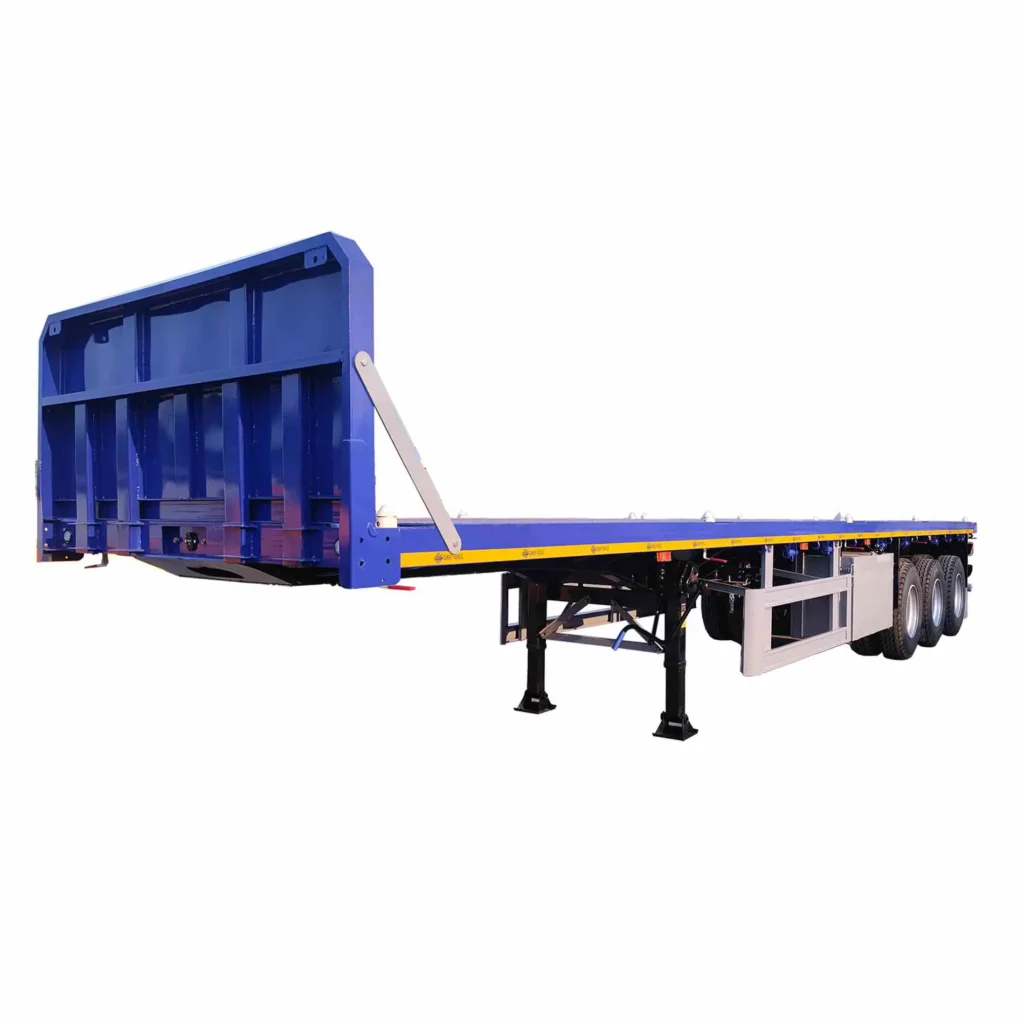
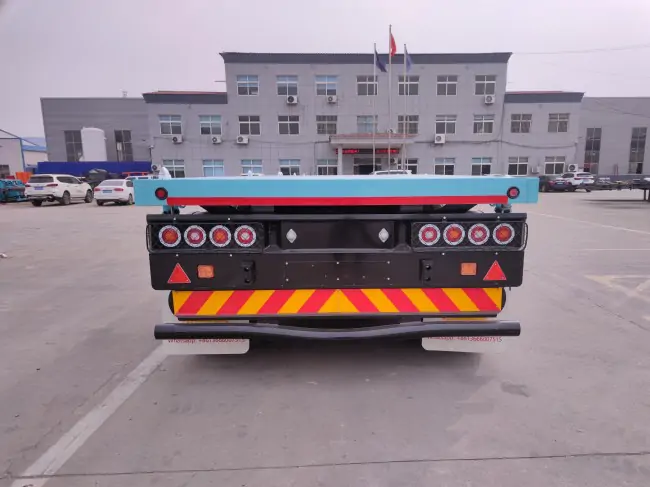
Our range of log trucks and timber haulers, from rigid to articulated models. Engineered for robust performance and secure log transport, our logging trucks tackle tough terrain, ensuring efficient, reliable timber delivery from forest to mill.
A log truck, commonly referred to as a logging truck, timber hauler, or logging transport vehicle, is a specialized heavy-duty truck designed for the efficient and safe transportation of felled trees, logs, or processed timber from forests or logging sites to sawmills, processing plants, or shipping yards. These trucks are built to withstand challenging off-road conditions and carry extremely heavy, often long, and irregularly shaped loads. Key features typically include powerful engines, robust chassis, specialized bunks and binders for securing logs, and often a grapple loader for self-loading capabilities. Log trucks are fundamental to the forestry industry, ensuring the vital movement of timber resources.
Log Truck for sale
Professional Skill Development
Professional Skill Development
Professional Skill Development
Professional Skill Development
loaded log truck application scenarios
Log trucks, including logging trucks, timber haulers, and logging transport vehicles, are indispensable in various scenarios within the forestry and timber industries.
Forestry Operations: Directly transporting freshly cut timber from remote logging sites deep within forests to primary roads or designated loading areas.
Sawmills & Processing Plants: Delivering logs of various sizes directly to sawmills for lumber production or to pulp mills for paper manufacturing.
Biomass & Energy Production: Hauling wood chips, logging residue, and other biomass materials for use in renewable energy generation or other industrial processes.
Road Construction in Forested Areas: Moving logs and timber products out of newly cleared areas for infrastructure development within forested regions.
Salvage Logging: Used in post-disaster scenarios (e.g., after storms or fires) to remove damaged or fallen trees for salvage purposes.
Forest Management: Transporting timber as part of sustainable forest management practices, including thinning and harvesting operations.
Built on an extra-strong, reinforced chassis with rugged suspension systems. This design handles extreme off-road terrain and immense, often uneven, log weights, ensuring stability for any logging truck.
Features robust steel bunks (stakes) to cradle logs and heavy-duty chain or strap binders. These securely contain the load, preventing shifting during transport for enhanced safety on a timber hauler.
Equipped with high-torque engines, durable transmissions, and often all-wheel drive. This provides exceptional traction and pulling power for navigating steep grades and challenging forest roads, vital for a logging transport vehicle.
Many models integrate a hydraulic grapple crane mounted behind the cab or on the trailer. This allows for efficient self-loading and unloading of logs, reducing reliance on separate equipment at the logging site.
Video of log trucks
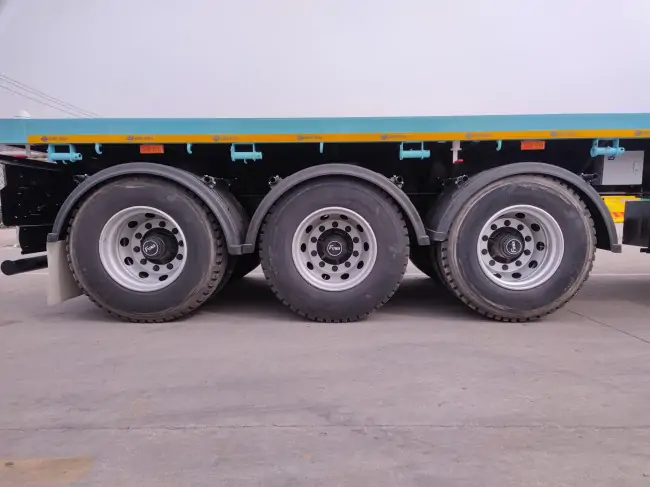
Flatbed Trailer with Henred-type axles and suspension
What makes a log truck different from a standard flatbed truck?
A log truck, or logging truck, is fundamentally different from a standard flatbed truck due to its specialized design for carrying cylindrical, often heavy, and irregularly shaped timber. While a flatbed has a completely flat, open deck for diverse cargo, a log truck is specifically equipped with log bunks (or stakes). These are robust, upright steel supports positioned along the sides of the truck or trailer that cradle the logs, preventing them from rolling off. Additionally, heavy-duty binders or chains are used to cinch the logs tightly together and to the bunks, ensuring the load is secure during transit over rough terrain.
Furthermore, logging transport vehicles are typically built on much more robust chassis with reinforced frames, heavy-duty axles, and often off-road-specific suspension systems and tires to withstand the challenging conditions of forest roads. Many also feature integrated hydraulic grapple loaders for self-loading, a feature rarely found on standard flatbeds. These design differences enable a log truck to safely and efficiently transport raw timber, a task for which a standard flatbed is neither designed nor safe.
How are logs secured on a logging transport vehicle for safe hauling?
Securing logs on a logging transport vehicle, also known as a log truck or timber hauler, is paramount for safety and involves specialized techniques. The primary method uses log bunks (stakes) and binders. Logs are stacked tightly within the robust steel bunks that extend vertically from the truck’s frame or trailer. These bunks prevent the logs from rolling off the sides.
Once loaded, the logs are secured using heavy-duty chains or synthetic straps with tensioning devices (binders or winches). These binders are threaded over the top of the entire load and cinched down tightly, compressing the logs firmly against the bunks and each other. The goal is to create a compact, stable unit that won’t shift during acceleration, braking, or turns, even on uneven forest roads. For longer logs, multiple sets of bunks and binders are used. Regular checks of the load and tension of the binders are critical during transit, especially after covering rough terrain, to ensure that the timber remains safely contained on the logging truck from the forest to its destination.
What role does a timber hauler play in sustainable forestry?
A timber hauler, or log truck, plays a crucial and often overlooked role in sustainable forestry practices. While the act of harvesting timber is the focus, the efficient and responsible transportation of those logs is essential for the entire supply chain to be sustainable. By using modern, well-maintained logging trucks, forestry operations can minimize their environmental impact. Efficient hauling reduces the number of trips needed, thereby cutting down on fuel consumption and associated emissions.
Furthermore, advances in logging transport vehicle technology, such as improved off-road capabilities and more precise loading systems (like grapple loaders), allow for timber extraction with less disturbance to sensitive forest ecosystems. They can navigate challenging terrain with minimal impact on soil and surrounding vegetation compared to older methods. Timber haulers facilitate the timely removal of timber, which is often crucial for forest health, thinning operations, or salvage after natural disasters, ensuring that resources are utilized efficiently. In essence, the log truck is a vital link in the chain that connects responsibly harvested timber to the markets, supporting the economic viability of sustainable forest management.
What are the challenges of operating a log truck on unpaved forest roads?
Operating a log truck, or logging truck, on unpaved forest roads presents significant challenges that demand specialized vehicle design and skilled operators. Firstly, uneven and rough terrain is common, including deep ruts, rocks, stumps, and steep grades, requiring a robust chassis, heavy-duty suspension, and often all-wheel drive for traction. Secondly, mud and soft ground conditions, especially after rain or snowmelt, can easily bog down a heavy timber hauler, necessitating powerful engines and specialized tires with aggressive treads.
Thirdly, tight turns and narrow passages are frequent, particularly on switchbacks or in densely wooded areas, requiring excellent maneuverability despite the truck’s long and heavy load. Fourthly, limited visibility due to dust, fog, or dense trees, combined with the presence of other logging equipment, increases accident risk. Finally, load stability is a constant concern; the shifting weight of logs on uneven surfaces requires vigilant securement and cautious driving. Overcoming these challenges ensures that the logging transport vehicle can safely and efficiently move timber out of the forest.
What are the key maintenance points for a logging truck?
Maintaining a logging truck, or log truck, is critical due to the harsh environments they operate in and the heavy, demanding loads they carry. Firstly, chassis and suspension components require constant attention. Inspect the frame for cracks, and check leaf springs, shock absorbers, and axles for damage or excessive wear from rough terrain. Proper lubrication of all suspension points is vital.
Secondly, the tire condition is paramount. Inspect for cuts, punctures, proper inflation, and even wear, as timber haulers often run on aggressive, high-flotation tires in challenging conditions. Thirdly, the braking system must be rigorously maintained due to the heavy loads and steep descents common in logging. Check brake pads, drums/rotors, air lines, and air reservoirs regularly. Fourthly, if equipped with a grapple loader, the hydraulic system (hoses, cylinders, pump, fluid levels) and the grapple mechanism itself (jaws, rotator) need daily inspection and lubrication. Finally, standard heavy-duty truck maintenance (engine oil, filters, transmission fluid, and cooling system) is essential, but given the extreme operating conditions, it often needs to be performed more frequently than for on-highway vehicles to ensure the reliability and safety of the logging transport vehicle.
Connect with us
Ready to partner? We’re convinced Sunsky Vehicle is your best choice! Reach out through the form or by phone.
*Our team will answer your inquiries within 24 hours.
*Your information will be kept strictly confidential.