
Buying a Flatbed Hauler is far more complex than purchasing a standard dry van. It represents one of the most critical capital investments for any hauling business. The sticker price on the dealer lot is only the start—choosing the wrong specifications can quickly turn a profitable asset into a costly liability, leading to increased downtime, non-compliance fines, and disastrous resale value. Savvy owner-operators know that maximizing return on investment (ROI) means looking beyond the basics. While most generic buying guides stop at discussing Gross Vehicle Weight Rating (GVWR) and overall length, they often ignore the nuanced engineering that truly defines a trailer’s durability and hauling capacity. This lack of detailed focus leaves buyers vulnerable to costly mistakes.
This expert guide will cut through the noise, revealing the 7 critical flatbed hualer features—from structural beam ratings to specialized decking—that professional buyers should never overlook, ensuring your new flatbed is perfectly spec’d for maximum performance and longevity.
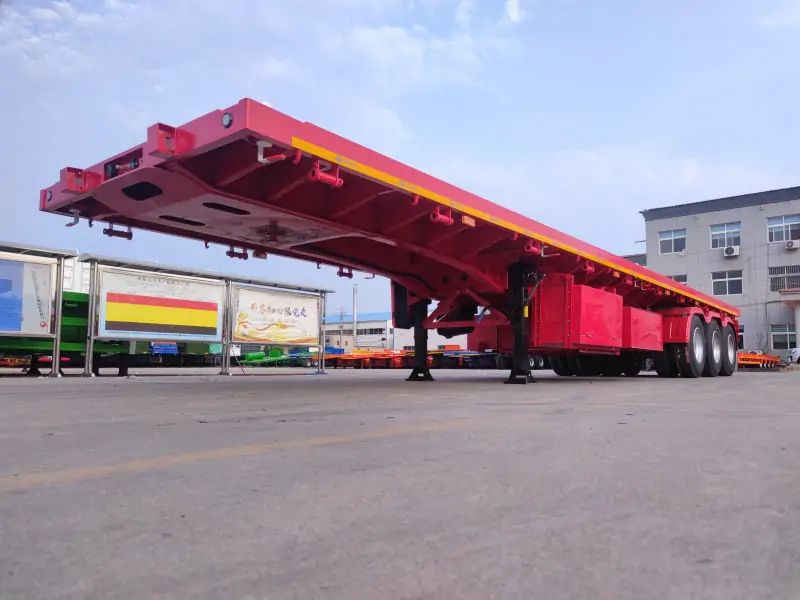
1. Main Beam Rating: Distributed vs. Concentrated Load
The single biggest mistake inexperienced buyers make is confusing the Gross Vehicle Weight Rating (GVWR) with the flatbed hualer’s true structural capacity.
GVWR vs. Main Beam Rating: The Critical Difference
- GVWR (Gross Vehicle Weight Rating): This number, typically found on the compliance plate, represents the maximum total weight the entire trailer (including its empty weight and all cargo) is legally designed to carry. It’s a calculation based on axles, tires, and frame.
- Main Beam Rating (Concentrated Load Rating): This is the far more critical number for flatbed operations. It specifies the maximum amount of weight the main structural beams can withstand when that weight is not evenly distributed.
Imagine a 48-foot trailer with a 90,000 lbs GVWR. If you distribute 80,000 lbs of lumber evenly, the trailer handles it fine. However, if you place a 50,000 lb steel coil—a massive, concentrated force—on just four feet of the deck, the main beams can fail or permanently warp, even though the total load is under the GVWR.
The “Coil Package” Configuration
If your hauling portfolio includes high-density, small-footprint cargo—such as steel coils, industrial machinery bases, or heavy drilling components—you must explicitly inquire about the Concentrated Load Rating.
A premium flatbed hualer designed for this work will feature a “Coil Package.” This often includes:
- Heavier gauge steel for the main beams.
- Closer cross-member spacing in the central section of the trailer.
- Additional reinforcement plates welded to the primary load-bearing area.
Actionable Tip: Don’t just accept a verbal assurance. Ask the dealer for the official specification sheet detailing the trailer’s concentrated load capacity, often expressed as “XX,XXX lbs over a 4-foot span.” This small detail is the firewall between a long-lasting trailer and an expensive piece of junk metal.
2. Flooring Material: Apitong vs. Aluminum vs. Pine
The foundation of your flatbed—the deck—is constantly exposed to brutal weather, friction from cargo, and the corrosive elements of the road. Your choice of flooring material dictates both the trailer’s payload capacity and its longevity.
The Three Main Deck Options
Option 1: Treated Pine Wood (The Budget Choice)
- Pros: Lowest initial cost, widely available, and relatively easy to replace.
- Cons: Short lifespan and low resistance to rot. Pine is a softer wood that absorbs moisture easily, quickly degrading when exposed to repeated rain, snow, or harsh chemicals. It also splinters under concentrated heavy load usage. Pine is only suitable for light-duty or intermittent use.
Option 2: Aluminum (The Lightweight Choice)
- Pros: Significantly reduces trailer weight (often allowing for an extra 500-1,000 lbs of revenue-generating cargo). Excellent corrosion resistance; never rusts.
- Cons: High repair costs and poor friction. Aluminum can be very slick when wet, posing a risk during loading and securement. A cracked aluminum panel requires specialized welding and is expensive to replace.
3. Axle Configuration: Spread Axle vs. Sliding Tandem
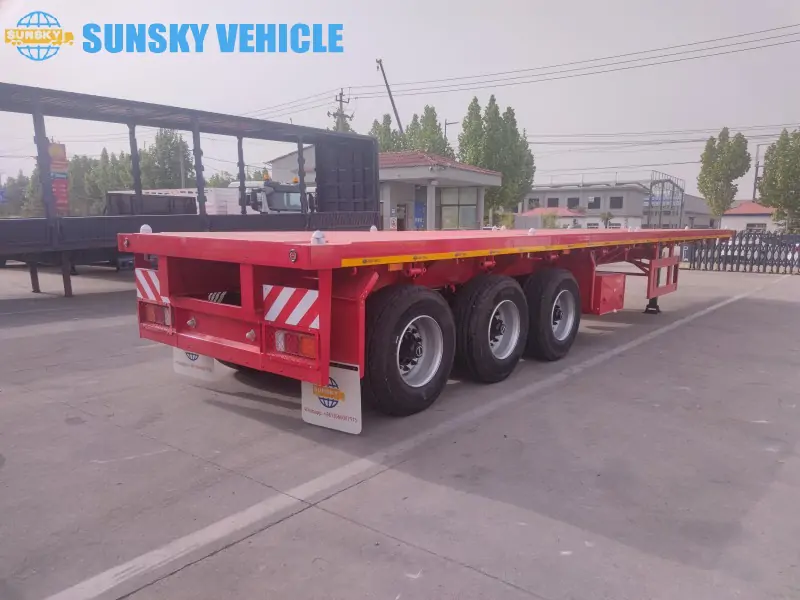
Once you have the frame and the floor sorted, the next component that directly impacts your legal hauling capacity and operational flexibility is the axle configuration. In flatbed trucking, the debate often comes down to two primary setups: Closed Tandem (Sliding) and Spread Axle.
The Decisive Factor: Weight Laws and Bridge Formulas
Your axle configuration is not just a matter of engineering; it’s a matter of federal and state weight regulations. The setup determines how much weight is distributed over the road, which impacts the legal load you can carry without violating local “Bridge Formulas.”
Option 1: Closed Tandem (Sliding) Axles
- Configuration: Axles are typically spaced less than 48 inches apart. Many modern flatbeds feature sliding tandems, allowing the driver to adjust the axle position manually.
- Pros: Superior maneuverability in tight spaces, city deliveries, and smaller docks. The combined close spacing makes the trailer easier to handle.
- Cons: Lower legal weight limit. Under federal rules, a closed tandem group is usually restricted to a maximum of 34,000 lbs.
Option 2: Spread Axle (10’1” Split) Configuration
- Configuration: The axles are separated by 10 feet 1 inch (or more). This extended distance is the key to maximizing payload.
- Pros: Maximum Legal Payload. By separating the weight, the spread axle configuration qualifies as two separate single axles under federal rules. This typically allows you to carry 20,000 lbs per axle, reaching a total legal capacity of 40,000 lbs on the tandem group—a crucial 6,000 lbs advantage over the closed tandem. Furthermore, the wider stance provides better weight stability and reduced sway.
- Cons: Increased tire scrub and wear during tight turns, and less flexibility in city driving.
Key Takeaway: If your primary focus is heavy haul capacity and maximizing revenue per trip, the initial investment in a Spread Axle configuration is essential. If city and localized delivery are your main business, the flexibility of a Sliding Closed Tandem might be more practical. Never ignore the specific state bridge laws for your main routes before making this choice.

4. Suspension Systems: Air Ride vs. Spring Ride
The suspension system is the critical link between the axles and the frame. Its job is to absorb road shocks, ensuring both the safety of the cargo and the structural longevity of the trailer itself. While both systems function, their long-term impact on your business differs significantly.
Spring Ride (Steel Leaf Suspension)
- Configuration: Uses layered steel leaf springs bolted directly to the axles and frame.
- Pros: Lower initial cost and simpler maintenance. The design is basic, making it robust and easy to repair if a leaf breaks.
- Cons: Harsh ride quality. Spring ride transfers maximum vibration to the cargo and the trailer frame, leading to increased wear and tear over time. For high-value or fragile loads, the constant jarring can be unacceptable. It also lacks flexibility in deck height adjustments.
Air Ride (Air Bag Suspension)
- Configuration: Uses compressed air bags positioned between the axle and the frame, managed by a sophisticated air delivery system.
- Pros: Superior protection and profitability. Air ride delivers a significantly smoother ride, protecting sensitive equipment and high-value cargo from damage. Crucially, many systems integrate onboard digital scales (or air-pressure gauges), allowing drivers to instantly verify axle weight distribution, dramatically reducing the risk of overweight fines and saving time at weigh stations.
- Cons: Higher initial purchase price and more complex to maintain (requires checking for air leaks).
Conclusion: For any flatbed operation carrying high-value, sensitive, or high-density cargo, Air Ride is a mandatory feature. The combination of reduced cargo damage, the advantage of onboard weighing, and the significantly higher resale value of air-equipped trailers makes the initial investment justifiable and highly beneficial in the long run.
5. Corrosion Resistance: Galvanized vs. Painted
For any trailer operating in harsh climates—especially those exposed to road salt, brine solutions, or coastal environments—corrosion is the single biggest enemy of structural integrity and resale value. How the flatbed hualer frame is finished will directly determine its lifespan and maintenance costs.
Option 1: Standard Paint Finish
- Process: The most common and budget-friendly finish. The trailer is typically sandblasted, primed, and coated with a high-quality urethane or epoxy paint.
- Pros: Low initial cost and provides immediate protection.
- Cons: The protection is only skin deep. Even the best multi-stage paint job is susceptible to chipping, scratching, and abrasion from cargo and road debris. Once the paint surface is breached, moisture penetrates, leading to rust formation within 3-5 years. This requires constant, costly sandblasting and repainting (or “touch-up” maintenance) throughout the trailer’s life.
Option 2: Hot-Dip Galvanized Finish
- Process: The entire finished steel trailer frame is submerged in a bath of molten zinc (850°F / 450°C). The zinc metallurgically bonds to the steel, coating the frame both inside and out.
- Pros: Ultimate corrosion defense and superior longevity. The zinc coating acts as a sacrificial layer; if the surface is scratched, the zinc surrounding the scratch corrodes first, protecting the steel frame beneath. This process can extend the usable lifespan of a trailer by 10 to 15 years or more, significantly reducing maintenance costs.
- Cons: Higher initial cost (typically 10-20% more than paint) and the finish is matte, which some buyers may find less aesthetically appealing than glossy paint.
Key Takeaway: If your flatbed operates in regions where road salt is used heavily (the “Salt Belt”) or near the coast, the initial expense of a Hot-Dip Galvanized trailer is an investment in durability that pays massive dividends in reduced maintenance and higher long-term resale value.
6. Load Securement Versatility: Beyond Basic D-Rings
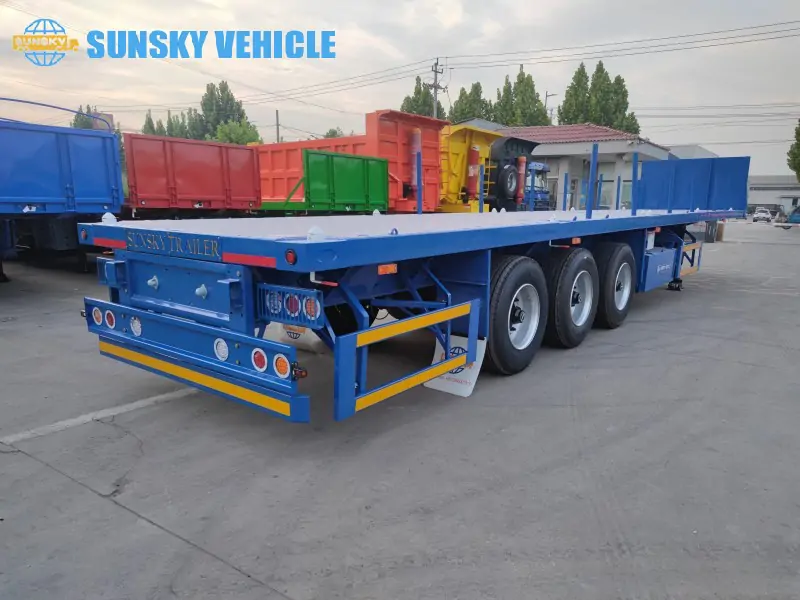
Load securement is not just about compliance; it is about efficiency and preventing catastrophic loss. The hardware installed on your Flatbed Hauler must match the sheer variety of cargo you intend to haul. Relying solely on fixed D-rings is a mistake that limits your flexibility and may compromise safety.
The Essential Flexibility Features
Feature A: Sliding Winch Tracks
The single most valuable feature for versatile load securement is the Sliding Winch Track (or Rail).
- Why it Matters: Cargo rarely fits perfectly between fixed tie-down points. If your winch is fixed in place, you may have an imperfect tie-down angle, which compromises tension and load safety (especially during hard braking or turns). Sliding tracks allow the operator to position the strap winches exactly where the cargo requires, ensuring the optimal angle and tension for the specific load.
- Pro Tip: Look for heavy-duty aluminum tracks and high-quality, weather-resistant winches that operate smoothly even after prolonged exposure to the elements.
Feature B: Rub Rails with Stake Pockets
The outer perimeter of the flatbed must serve a dual purpose: load containment and protection.
- Rub Rails: These sturdy side rails run the length of the deck and act as the primary defense against damage to the trailer structure from forklift drivers, cargo shifts, or close-quarter maneuvers. They also serve as an extra external anchor point for chains and straps, offering more flexibility than the deck alone.
- Stake Pockets: These vertical openings embedded in the rub rail are essential for quick configuration. They allow drivers to drop in wooden or steel stakes to form temporary sides for hauling loose material like gravel, scrap, or bagged items, significantly increasing the trailer’s utility.
Key Takeaway: A well-spec’d flatbed maximizes the ways you can safely and legally secure diverse cargo, minimizing the time spent chaining and strapping. Always test the ease of use and the structural integrity of the securement hardware before purchasing.
7. Deck Height & Wheel Size (Low Pro vs. Tall Rubber)
The final critical feature to consider is often overlooked until the first time you attempt to haul tall equipment: the Deck Height. Your Flatbed Hauler’s running gear—specifically the wheel size—directly determines how close the deck sits to the ground, and thus, how much vertical clearance you have beneath bridges and power lines (typically 13 feet, 6 inches / 4.11 meters maximum in the US).
Standard Wheels (The Clearance Risk)
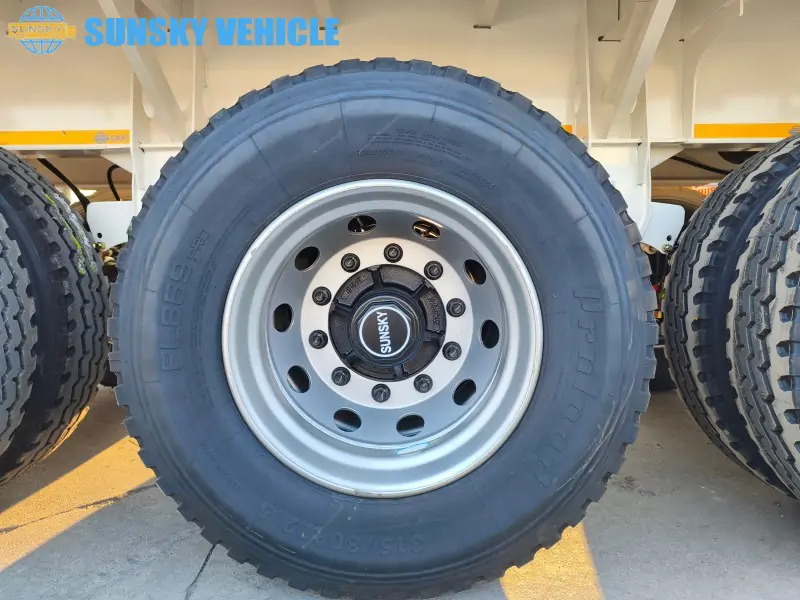
- Common Sizes: 22.5″ or 24.5″ diameter wheels.
- Deck Height: These sizes result in a standard deck height (often around 58–62 inches / 1.47–1.57 meters).
- Usage: Perfectly adequate for hauling standard height cargo like lumber, steel, and general freight.
Low-Profile Wheels (The Height Advantage)
- Common Sizes: 17.5″ or 19.5″ diameter low-profile wheels and tires.
- Deck Height: These significantly smaller wheels allow the trailer deck to sit much lower—often down to 50–54 inches (1.27–1.37 meters).
- Usage: Essential for Specialized Hauling. If your business involves frequently transporting tall machinery, excavators, or pre-fabricated components, that extra 8 to 12 inches of vertical space is invaluable.
Critical Mistake: Ignoring deck height often leads to expensive non-compliance. If you buy a standard flatbed and attempt to haul machinery that pushes the limit, you risk being over-height and violating legal regulations, resulting in fines, delays, and complex re-routing.
Key Takeaway: If your cargo height frequently exceeds 8 feet (2.44 meters), ensure your new flatbed is spec’d with the smaller 17.5″ or 19.5″ wheels to gain the crucial vertical clearance advantage.
Stop Buying a Flatbed, Start Investing in Your Business
We’ve moved far beyond the basic considerations of length and GVWR. The decision to purchase a Flatbed Hauler is a calculated risk that hinges on deep technical understanding. Every feature we’ve discussed—from the Concentrated Load Rating of the main beam to the Corrosion Resistance provided by a galvanized finish—is an investment that translates directly into reduced operating costs and increased revenue.
The greatest financial mistake in commercial hauling is prioritizing low upfront cost over long-term durability and specialized capability. Ignoring these critical features leads to premature structural failure, higher maintenance bills, costly out-of-route deviations, and reduced trade-in value.
By focusing on these 7 professional-grade specifications, you ensure your trailer is compliant, durable, and optimized to handle the heavy, specialized loads that generate the highest profit margins.
Ready to maximize your fleet’s potential? Don’t risk thousands on a trailer that compromises your bottom line.
Click here to contact us for a free consultation with SUNSKY VEHICLE experts. Let us help you precisely configure your next flatbed hualer according to your unique route and cargo requirements.
Frequently Asked Questions
Q: What is the best wood for Flatbed Hauler floors?
A: Apitong. While Pine is cheaper and Aluminum is lighter, Apitong hardwood offers the best balance of friction, durability, and resistance to rot for commercial heavy hauling applications.
Q: How much weight can a spread axle flatbed carry?
A: A spread axle configuration (10’1” split or greater) often allows the tandem group to legally carry up to 40,000 lbs (20,000 lbs per axle) under US federal bridge law interpretations, giving it a crucial advantage over the 34,000 lbs limit of a closed tandem.
Q: Is air ride suspension worth the money?
A: Yes. For high-value cargo and long-term investment, air ride is worth the money. It significantly reduces cargo damage, holds a much higher resale value, and often integrates with onboard weighing systems to prevent costly overweight fines.